

Blog
Jackfruit Powder: The World’s Largest Tree-Borne Fruit and Its Journey into Modern Nutrition

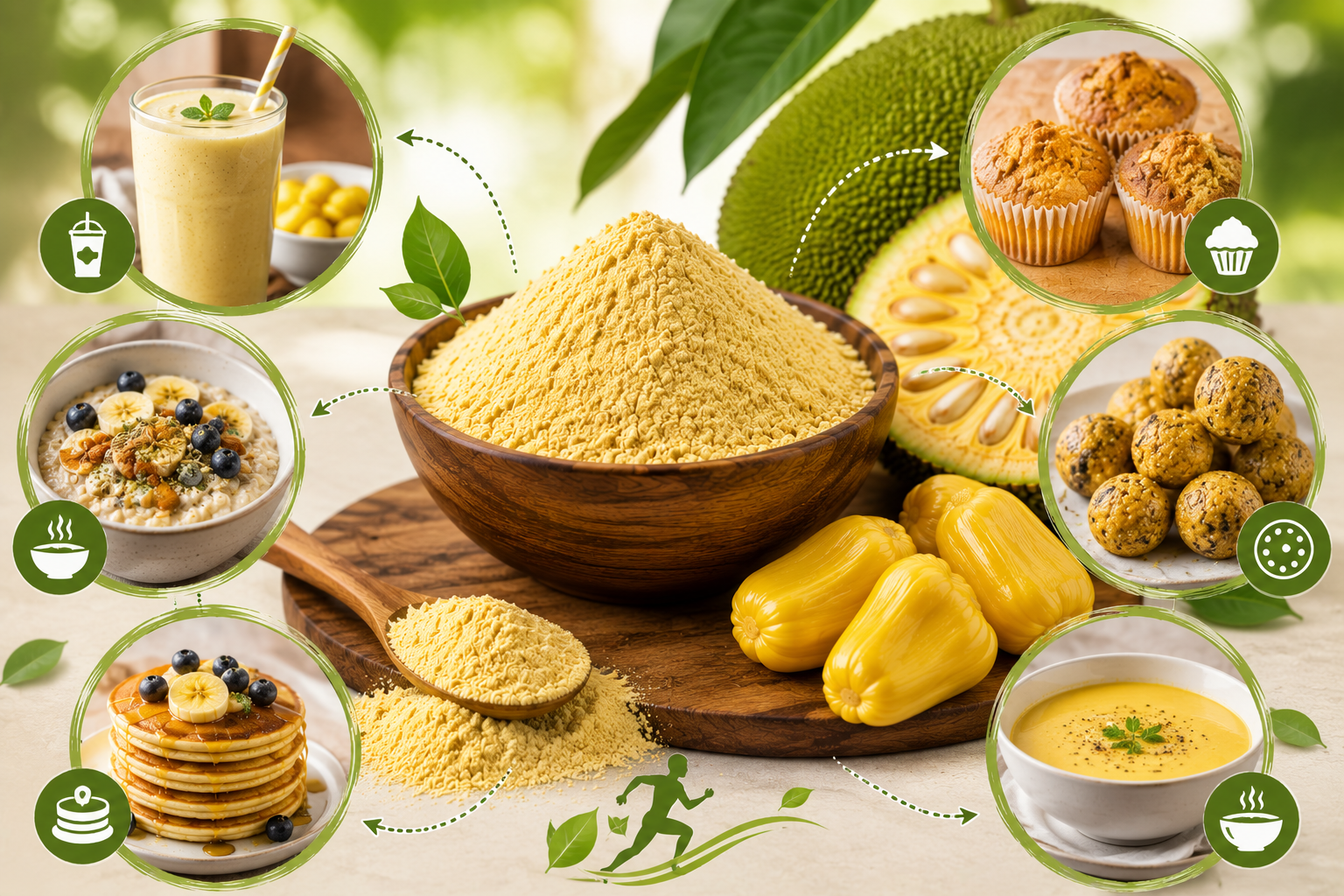
Imagine a single fruit weighing over 30 kilograms, growing directly from the trunk of a tree, packed with nutrients, naturally sweet when ripe, and versatile enough to be enjoyed in both sweet and savory dishes. This remarkable fruit is jackfruit, one of nature’s most extraordinary gifts and the world’s largest tree-borne fruit.
For centuries, jackfruit has been an essential part of traditional diets across India and Southeast Asia. Families have enjoyed it in curries, desserts, snacks, and homemade delicacies, while its seeds have been roasted and eaten as a nutritious treat. Today, this traditional fruit is gaining worldwide recognition for a completely different reason—its exceptional nutritional value and its potential as a modern functional food.
As consumers increasingly seek natural, minimally processed, and nutrient-rich ingredients, freeze-drying has opened new possibilities for preserving tropical fruits. Freeze-dried jackfruit powder combines the goodness of fresh jackfruit with the convenience of a shelf-stable product, making it easier to enjoy this tropical fruit throughout the year.
From ancient orchards to modern food innovation, jackfruit continues to prove that traditional foods can play an important role in the future of healthy eating.
The Fascinating Story of Jackfruit
Jackfruit (Artocarpus heterophyllus) belongs to the Moraceae family and is believed to have originated in the rainforests of South and Southeast Asia. Over generations, it has become deeply rooted in the food culture of countries such as India, Bangladesh, Sri Lanka, Thailand, Vietnam, Indonesia, and Malaysia.
India remains one of the largest producers of jackfruit, with cultivation spread across Kerala, Karnataka, Tamil Nadu, Maharashtra, Assam, West Bengal, Odisha, and Tripura. The tropical climate provides ideal growing conditions, allowing the trees to produce abundant fruit every season.
One of the most remarkable characteristics of jackfruit is its size. A mature fruit can weigh anywhere between 5 and 35 kilograms, while some exceptional fruits can grow even larger. Despite its enormous size, every part of the fruit offers value—from its sweet bulbs and nutritious seeds to its fibrous flesh.
Jackfruit has often been called the “miracle fruit” because of its versatility. Whether consumed fresh, cooked, dried, or powdered, it continues to serve as an important source of nutrition for millions of people.
Ripe vs. Raw Jackfruit: Understanding the Difference
One of the reasons jackfruit is so unique is that it offers two completely different culinary experiences depending on its stage of maturity.
Ripe Jackfruit
When fully ripe, jackfruit develops a naturally sweet aroma and bright yellow flesh with a tropical flavor. It is commonly eaten fresh and is widely appreciated for its sweetness and juicy texture. The ripe fruit is also suitable for producing freeze-dried fruit powder while retaining its characteristic taste and aroma.
Raw (Green) Jackfruit
Raw jackfruit has a firm texture and mild flavor. It is traditionally cooked in curries and savory dishes and has gained international recognition as a plant-based alternative because of its fibrous texture.
Although both forms originate from the same fruit, each serves different culinary purposes while offering valuable nutrients.
Why Jackfruit Is Considered Nature’s Multi-Purpose Fruit
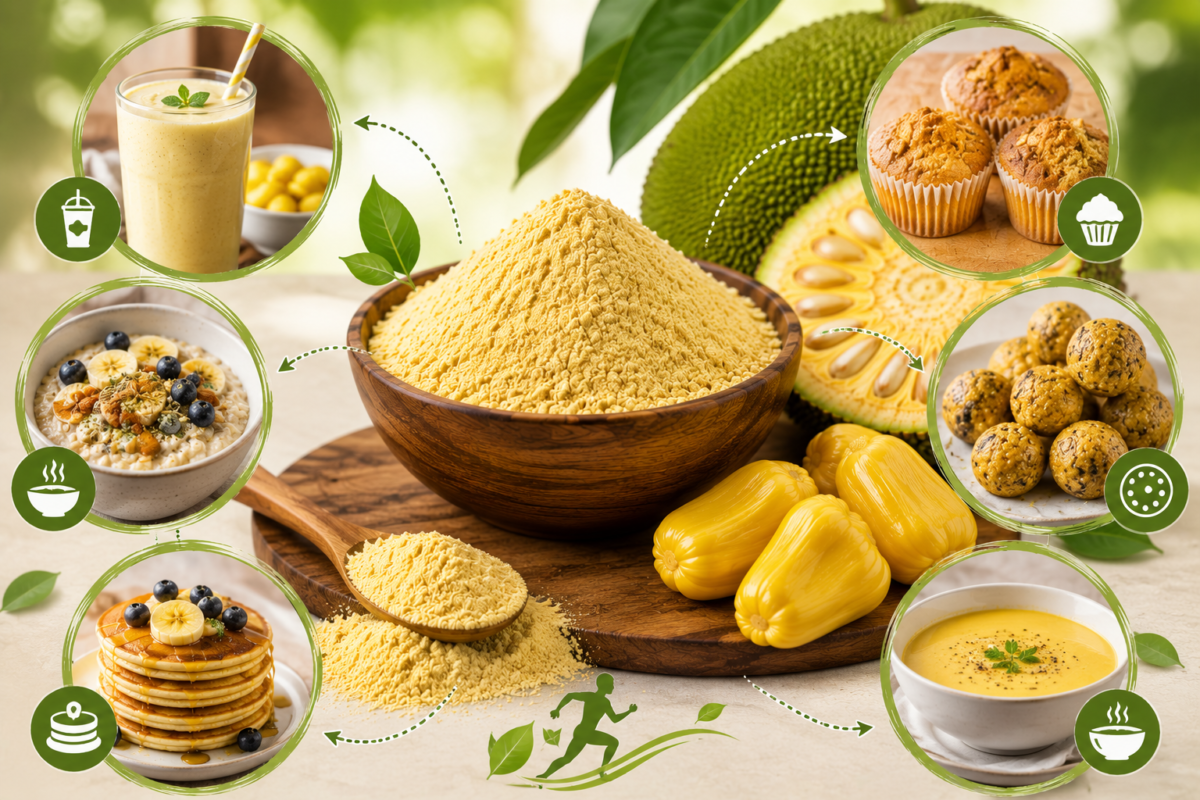
Unlike many fruits where only the edible portion is used, jackfruit is valued because almost every part has practical applications.
The sweet fruit bulbs are consumed fresh or processed into value-added products.
The seeds are edible after cooking or roasting and are traditionally incorporated into regional cuisines.
Raw jackfruit is widely used in savory recipes because of its unique texture.
The wood of the jackfruit tree is highly valued for furniture and handicrafts due to its durability and attractive golden color.
Even the leaves are commonly used as livestock feed in many agricultural communities.
This remarkable versatility makes jackfruit one of the most resource-efficient tropical fruits cultivated today.
Nutritional Profile of Jackfruit
Jackfruit provides a variety of essential nutrients while remaining naturally low in saturated fat. It contains carbohydrates that provide energy, dietary fiber, vitamins, minerals, and beneficial plant compounds.
| Nutrient | Approximate Value (Per 100 g Fresh Jackfruit) |
| Calories | 95 kcal |
| Carbohydrates | 23.5 g |
| Dietary Fiber | 1.8 g |
| Protein | 1.7 g |
| Fat | 0.6 g |
| Vitamin C | 13.7 mg |
| Potassium | 448 mg |
| Magnesium | 29 mg |
| Calcium | 24 mg |
| Iron | 0.23 mg |
Jackfruit also contains vitamin A, vitamin B6, folate, manganese, carotenoids, and naturally occurring antioxidants that contribute to overall wellness.
Health Benefits of Jackfruit
A Natural Source of Energy
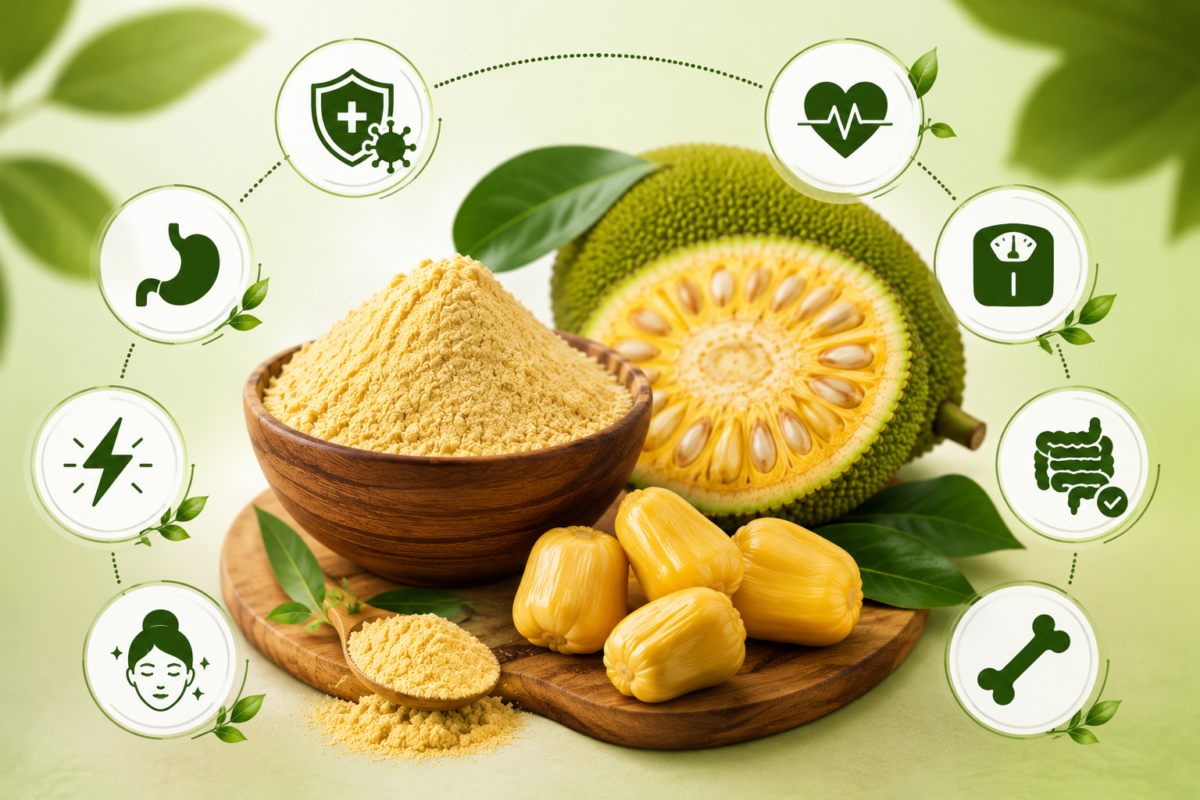
Jackfruit contains naturally occurring carbohydrates that provide energy for everyday activities, making it a satisfying addition to a balanced diet.
Supports Digestive Health
The dietary fiber present in jackfruit contributes to healthy digestion and supports regular bowel function as part of a fiber-rich eating pattern.
Rich in Vitamin C
Vitamin C contributes to the normal functioning of the immune system and supports collagen formation, making jackfruit a valuable source of this essential nutrient.
Contains Beneficial Antioxidants
Jackfruit naturally contains carotenoids and flavonoids that help protect cells from oxidative stress.
Supports Heart Health
Potassium is an important mineral found in jackfruit that contributes to normal muscle function and helps maintain healthy blood pressure when consumed as part of a balanced diet.
Supports Healthy Skin
The combination of vitamin C and natural antioxidants contributes to maintaining healthy skin by supporting collagen production and protecting cells from environmental stress.
Why Fresh Jackfruit Can Be Challenging
Despite its impressive nutritional profile, fresh jackfruit presents several practical challenges.
Its enormous size makes transportation, storage, and handling more complicated than many other fruits. Cutting open a fresh jackfruit also requires time and preparation because it contains a sticky natural latex that can adhere to knives and hands.
Once opened, the fruit should be consumed or processed quickly to preserve its freshness. Like many tropical fruits, jackfruit is seasonal, meaning fresh availability may be limited outside harvesting periods.
These factors often lead to higher transportation costs, storage challenges, and increased food waste.
How Freeze-Drying Gives Jackfruit a New Life
Freeze-drying is one of the most advanced methods of preserving fruits while maintaining much of their natural quality.
The process begins by selecting high-quality jackfruit that is carefully cleaned and prepared. The fruit is rapidly frozen before being placed inside a vacuum chamber.
Instead of melting into water, the frozen moisture changes directly into vapor through sublimation. Because the process takes place at low temperatures, many heat-sensitive characteristics of the fruit are better preserved compared to conventional drying methods.
After moisture removal, the dried fruit is milled into a fine powder, resulting in a product that is lightweight, convenient, and suitable for long-term storage.
Why Freeze-Dried Jackfruit Powder Is Gaining Popularity
Modern consumers are increasingly choosing foods that combine nutrition with convenience.
Freeze-dried jackfruit powder offers several advantages that align with these changing preferences. It has a significantly longer shelf life than fresh fruit, making it easier to store and transport. The low-moisture content also helps reduce spoilage and food waste.
Another advantage is that freeze-drying helps preserve the fruit’s natural colour, aroma, and much of its nutritional value without relying on artificial preservatives.
As interest in tropical fruits, clean-label products, and minimally processed ingredients continues to grow, freeze-dried jackfruit powder is becoming a preferred option for consumers looking for natural fruit-based nutrition.
The Future of Tropical Fruit Innovation
The global food industry is rapidly evolving as consumers demand healthier, more sustainable, and naturally nutritious products.
Tropical fruits are no longer viewed only as seasonal produce—they are becoming valuable ingredients in modern food innovation. Advanced preservation technologies such as freeze-drying are making it possible to enjoy tropical fruits beyond their harvest season while maintaining high quality.
With growing awareness of balanced nutrition and reduced food waste, freeze-dried fruit powders are expected to play an increasingly important role in the future of healthy eating.
Jackfruit, with its rich heritage, remarkable versatility, and impressive nutritional profile, is well positioned to become one of the leading tropical fruits in this transformation.
Conclusion
Jackfruit is much more than the world’s largest tree-borne fruit. It represents a unique combination of tradition, nutrition, and innovation. From its centuries-old role in tropical cuisines to its growing presence in modern food processing, jackfruit continues to demonstrate its value as a highly versatile fruit.
While fresh jackfruit offers exceptional taste and nutrition, challenges such as its large size, seasonal availability, and short shelf life have encouraged the adoption of advanced preservation methods. Freeze-drying provides an effective solution by helping preserve much of the fruit’s natural flavour, colour, and nutritional qualities while extending its usability.
As consumers continue to embrace healthier lifestyles and natural food choices, freeze-dried jackfruit powder is emerging as a convenient and nutritious way to enjoy one of nature’s most remarkable tropical fruits. By combining traditional goodness with modern technology, it reflects the future of fruit-based nutrition in an increasingly health-conscious world.