

Blog
Freeze-Dried Lemon: History, Uses, Applications & B2B Food Industry Guide

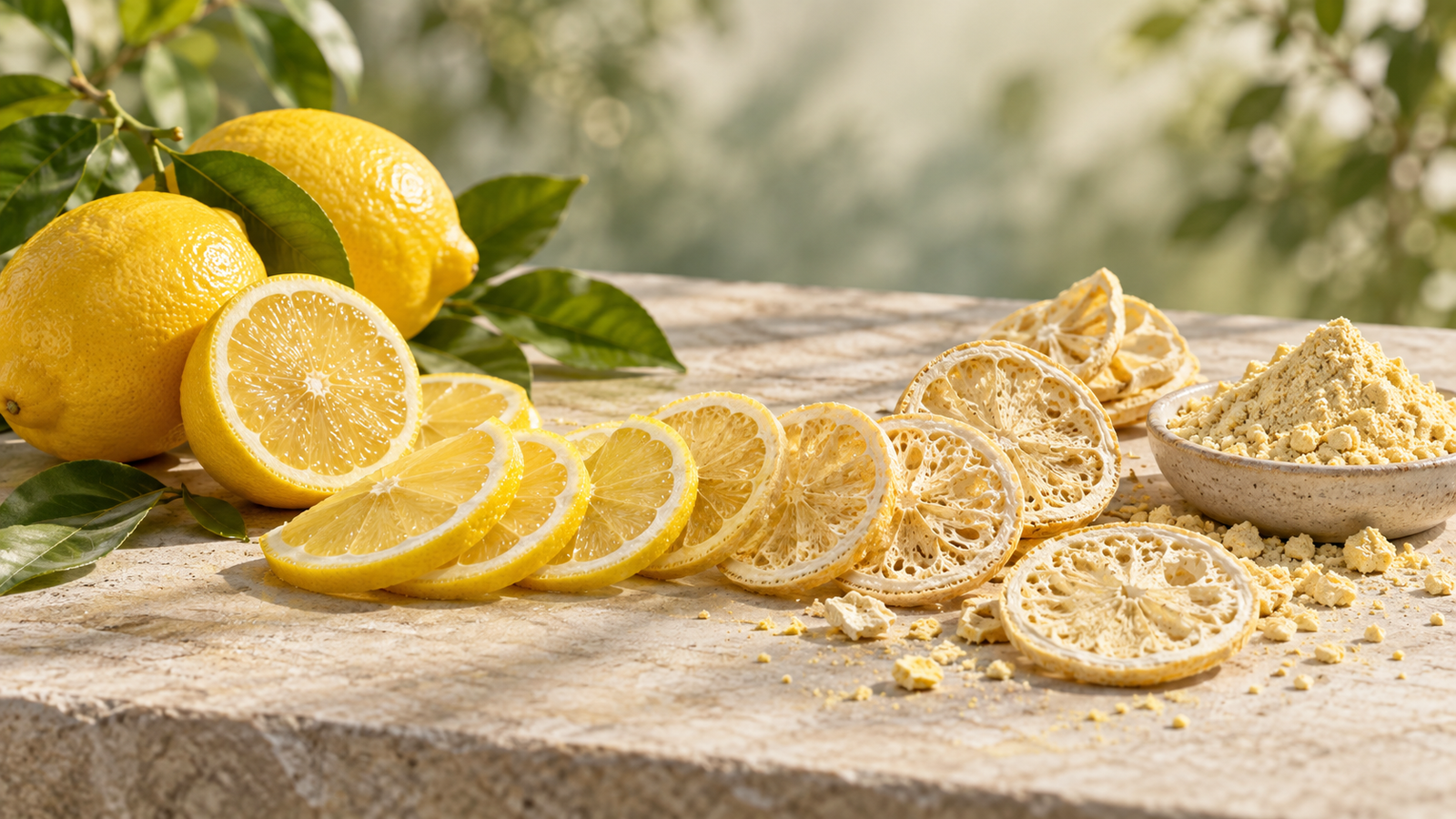
Lemon is one of the most widely recognized citrus fruits, valued for its distinctive sour taste, refreshing aroma and versatility. From traditional cooking and beverages to modern food processing, lemon is used across a wide range of industries.
Today, advancements in food-processing technology have created new value-added forms of lemon, including lemon powder, dried lemon, lemon slices and freeze-dried lemon. Among these, freeze-drying offers a convenient way to produce lightweight, low-moisture lemon ingredients while helping retain important characteristics of the original fruit.
For food and beverage manufacturers, freeze-dried lemon can be used in beverages, bakery products, confectionery, tea, seasonings, desserts and other food formulations.
1. What Is Lemon?
Lemon is commonly known as Citrus × limon and belongs to the Rutaceae family. It is a cultivated citrus hybrid with a complex genetic background involving several citrus species.
A lemon fruit can broadly be divided into:
- Flavedo – the coloured outer peel
- Albedo – the white inner peel
- Pulp and juice vesicles – the edible interior
Different parts of the lemon have different commercial applications. Lemon juice is primarily valued for its acidity and flavour, while the peel contains aromatic compounds, essential oils, flavonoids and pectin.
This makes lemon useful not only as a fresh fruit but also as a versatile raw material for food and ingredient processing.
2. History of Lemon
The history of lemon is closely linked with the wider development and movement of citrus crops.
Citrus plants are believed to have originated in parts of Asia, particularly the Himalayan region and areas around southwestern China and northern India. Over centuries, citrus fruits spread through trade and cultivation into the Middle East, Mediterranean region and other parts of the world.
Lemon developed as a cultivated citrus hybrid and gradually became an important fruit in Mediterranean and Asian cuisines.
Historically, lemon juice was also associated with preventing scurvy, a condition caused by vitamin C deficiency. Before vitamin C was scientifically identified, citrus fruits and their juices were used as an important dietary source for preventing the disease.
Today, lemon is cultivated commercially in many parts of the world, including India, and is used extensively in both fresh and processed forms.

3. Nutritional and Functional Characteristics of Lemon
Lemon is particularly known for its vitamin C content and acidic flavour. It also contains organic acids, dietary fibre and various plant compounds.
Important components associated with lemon include:
- Vitamin C
- Organic acids
- Flavonoids
- Phenolic compounds
- Essential oils
- Pectin
- Dietary fibre
- Aromatic compounds
Lemon peel and essential oil contain various volatile and bioactive compounds, including D-limonene, which contributes significantly to the characteristic citrus aroma.
The composition of processed lemon products can vary depending on the fruit variety, maturity, processing conditions and storage. Therefore, nutritional and functional properties should be evaluated according to the specific finished ingredient.
4. Uses of Lemon
Food & Culinary Uses
Fresh lemon and lemon-derived ingredients are commonly used in:
- Sauces
- Dressings
- Marinades
- Seasonings
- Desserts
- Bakery products
- Confectionery
- Dairy products
Beverage Uses
Lemon is widely used in:
- Lemonade
- Soft drinks
- Flavoured water
- Tea
- Herbal beverages
- Mocktails
- Drink mixes
Industrial Uses
Lemon-derived ingredients can also be used in:
- Food flavouring
- Essential oils
- Pectin production
- Nutraceutical formulations
- Cosmetic and personal-care products
The ability to use different parts of the fruit makes lemon an important raw material for value-added processing.
5. Lemon Juice, Peel and Essential Oil
Lemon Juice
Lemon juice is primarily used for its acidic taste and citrus flavour.
Common applications include:
- Beverages
- Sauces
- Dressings
- Marinades
- Bakery products
- Desserts
- Processed foods
Lemon Peel
Lemon peel contains aromatic compounds and pectin and can be processed into:
- Lemon zest
- Dried lemon peel
- Lemon peel powder
- Flavouring ingredients
- Pectin-related ingredients
- Essential oil
Lemon Essential Oil
Lemon essential oil is valued for its strong citrus aroma and is used in:
- Food flavouring
- Beverages
- Fragrance products
- Cosmetics
- Personal-care products
Lemon essential oil contains volatile compounds such as D-limonene that contribute to its characteristic aroma.
6. What Is Freeze-Dried Lemon?
Freeze-dried lemon is lemon that has undergone a controlled freeze-drying process to remove moisture while helping preserve important characteristics of the original fruit.
Unlike conventional hot-air drying, freeze-drying works at low temperatures under vacuum.
The basic process involves three stages:
1. Freezing
The lemon is frozen under controlled conditions.
2. Primary Drying
Under vacuum, the frozen water changes directly from ice into vapour through sublimation.
3. Secondary Drying
Remaining moisture is further removed to achieve the desired final moisture level.
This process produces a lightweight, porous and low-moisture ingredient. Research on freeze-drying indicates that the technology can help preserve colour, flavour, structure and selected nutritional or bioactive characteristics, although actual results depend on the raw material and processing conditions.
7. Freeze-Dried Lemon Formats
Depending on the intended application, lemon can be processed into different freeze-dried formats.
Freeze-Dried Lemon Slices
Freeze-dried slices retain the visual identity of the fruit and can be used for:
- Beverage garnishing
- Tea
- Infused water
- Mocktails
- Cocktails
- Hospitality
- Premium food presentation
Freeze-Dried Lemon Powder
Powder is a convenient format for industrial food formulations.
Potential applications include:
- Beverage mixes
- Bakery products
- Seasonings
- Confectionery
- Dessert mixes
- Food formulations
Freeze-Dried Lemon Pieces
Small pieces or granules can be incorporated into:
- Snacks
- Cereals
- Bakery products
- Confectionery
- Tea blends
- Fruit-based products
The appropriate format depends on the manufacturer’s formulation and final product requirements.
8. Benefits of Freeze-Dried Lemon for Food Applications
Freeze-dried lemon offers several characteristics that can make it useful as a B2B ingredient.
Low Moisture
Most of the water is removed during processing, creating a dry ingredient suitable for many dry formulations.
Lightweight
Removing water considerably reduces the weight of the product, which can make handling and transportation more convenient.
Convenient Handling
Powder, pieces and slices can be stored and measured more easily than fresh fruit in many manufacturing environments.
Flavour and Aroma
Freeze-drying is designed to minimize heat-related changes and can help retain important sensory characteristics of the original fruit.
Versatile Applications
The ingredient can be incorporated into sweet, savoury, beverage and specialty food formulations.
Value-Added Fruit Ingredient Freeze-drying transforms fresh lemon into a premium, convenient ingredient with applications beyond traditional fresh-fruit use.
9. Applications of Freeze-Dried Lemon
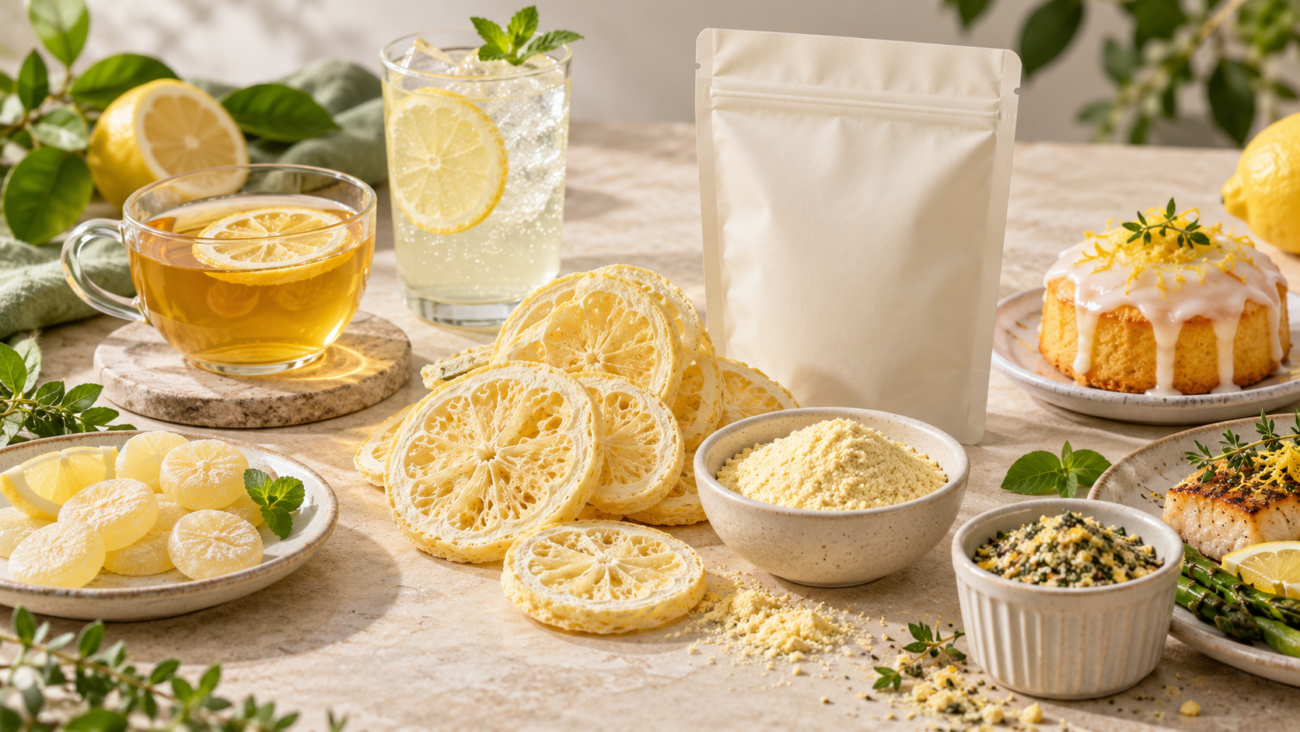
Beverage Industry
Freeze-dried lemon can be considered for:
- Instant lemon drink mixes
- Tea blends
- Herbal beverages
- Flavoured water
- Lemonade products
- Mocktails
- Premium beverage formulations
Lemon slices can also provide visual appeal in premium beverages and hospitality settings.
Bakery Industry
Freeze-dried lemon powder can be used in:
- Cakes
- Cookies
- Biscuits
- Muffins
- Pastries
- Cheesecakes
- Dessert mixes
- Baking mixes
The dry format can be useful where manufacturers want citrus flavour without introducing the same amount of moisture associated with fresh lemon juice.
Confectionery
Potential applications include:
- Candies
- Gummies
- Toffees
- Chocolate products
- Sour confectionery
- Dessert decorations
Lemon powder or pieces can provide a distinctive sweet-and-sour citrus profile.
Tea & Herbal Products
Freeze-dried lemon pieces can be incorporated into:
- Green tea
- Black tea
- Herbal tea
- Fruit tea
- Citrus tea blends
Seasonings & Culinary Products
Lemon powder can be used in:
- Spice blends
- Seasonings
- Marinades
- Salad dressings
- Sauces
- Seafood seasonings
- Meat seasonings
- Ready-to-cook mixes
Dairy & Desserts
Potential applications include:
- Yogurt
- Ice cream
- Sorbets
- Frozen desserts
- Custards
- Puddings
- Dessert sauces
10. Freeze-Dried Lemon vs Fresh Lemon
| Feature | Fresh Lemon | Freeze-Dried Lemon |
| Moisture | High | Very low |
| Weight | Higher | Lower |
| Storage | Fresh-fruit storage required | Dry storage when properly packaged |
| Handling | Perishable | Convenient dry format |
| Applications | Fresh juice, zest, cooking | Powder, pieces, slices and dry formulations |
| Transportation | Higher water content | Lightweight |
| Formulation | Adds moisture | Suitable for many dry formulation |
Freeze-drying generally involves greater processing and energy requirements than conventional drying. Therefore, it is particularly relevant for applications where ingredient quality, convenience and premium positioning are important.
11. Packaging and Storage
Because freeze-dried ingredients have very low moisture and a porous structure, they can readily absorb moisture from the surrounding environment.
Proper packaging is therefore important to protect freeze-dried lemon from:
- Moisture
- Oxygen
- Light
- Contamination
- Aroma loss
- Texture changes
The final shelf life depends on several factors, including processing conditions, packaging material, moisture level and storage conditions. For B2B applications, packaging should be selected according to the product format, distribution conditions and intended shelf life.
12. Who Can Use Freeze-Dried Lemon?
Freeze-dried lemon can be relevant to various B2B industries, including:
- Food manufacturers
- Beverage companies
- Tea brands
- Bakery manufacturers
- Confectionery companies
- Seasoning manufacturers
- Nutraceutical companies
- Hospitality businesses
- Ingredient distributors
- Private-label food brands
Manufacturers can select powder, pieces or slices depending on their product requirements.
13. Why Freeze-Dried Lemon Is a Value-Added Ingredient
Fresh lemon is traditionally used for juice, zest and cooking. Freeze-drying expands its potential by converting the fruit into convenient ingredient formats.
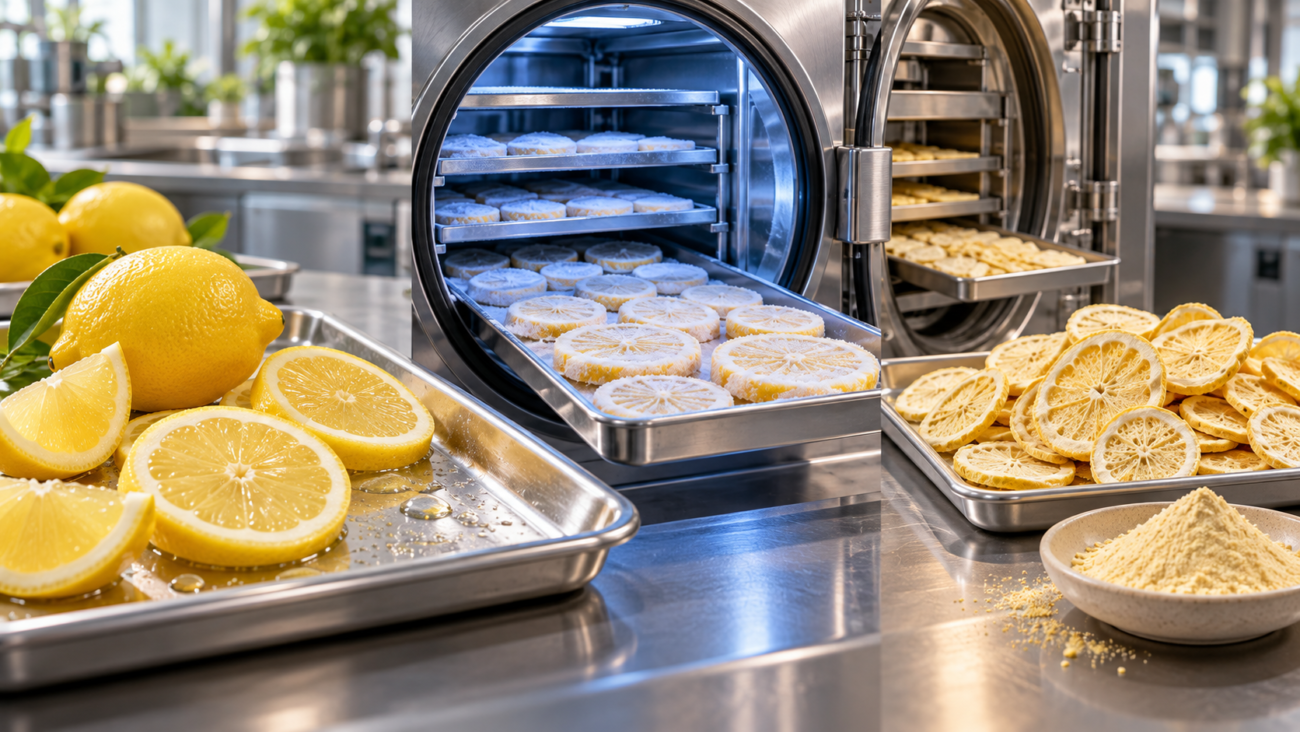
The value-addition chain can be represented as:
Fresh Lemon → Processing → Freeze-Drying → Powder / Pieces / Slices → Food & Beverage Applications
This creates opportunities for manufacturers to incorporate lemon into products where fresh fruit may not be practical because of moisture, perishability or handling requirements.
Freeze-drying also supports the development of premium fruit ingredients for modern food formulations.
14. Conclusion
Lemon has a long history as an important citrus fruit and continues to play a major role in food and beverage industries worldwide.
Its juice, peel and essential oil each provide different functional and commercial possibilities. From beverages and bakery products to confectionery, tea, seasonings and desserts, lemon remains one of the most versatile citrus ingredients.
With modern processing technology, lemon can be transformed into freeze-dried slices, pieces and powder, providing manufacturers with lightweight, low-moisture and convenient ingredient formats.
Freeze-drying uses low temperatures and vacuum conditions to remove water through sublimation. This approach can help retain important sensory and structural characteristics of the original fruit, although the final quality depends on raw material and processing parameters.
For food and beverage manufacturers looking for premium citrus ingredients, freeze-dried lemon offers a versatile way to bring authentic lemon characteristics into modern product formulations.
Freeze-Dried Lemon for B2B Applications
Agro Freeze Dry Pvt. Ltd. provides freeze-dried food ingredients for modern food and beverage applications.
Freeze-dried lemon can be explored in formats such as powder, pieces and slices, depending on the intended application and product requirements.
Whether you are developing beverages, bakery products, tea blends, confectionery, seasonings or other food products, the right freeze-dried lemon format can help simplify ingredient handling while adding authentic citrus character.
Looking for freeze-dried lemon for your business?
Contact Agro Freeze Dry Pvt. Ltd. to discuss your B2B ingredient requirements, preferred format and bulk requirements.
Pure. Natural. Preserved.