
Blog
Apple Powder: History, Production, Applications and Growing Importance in the Food Industry

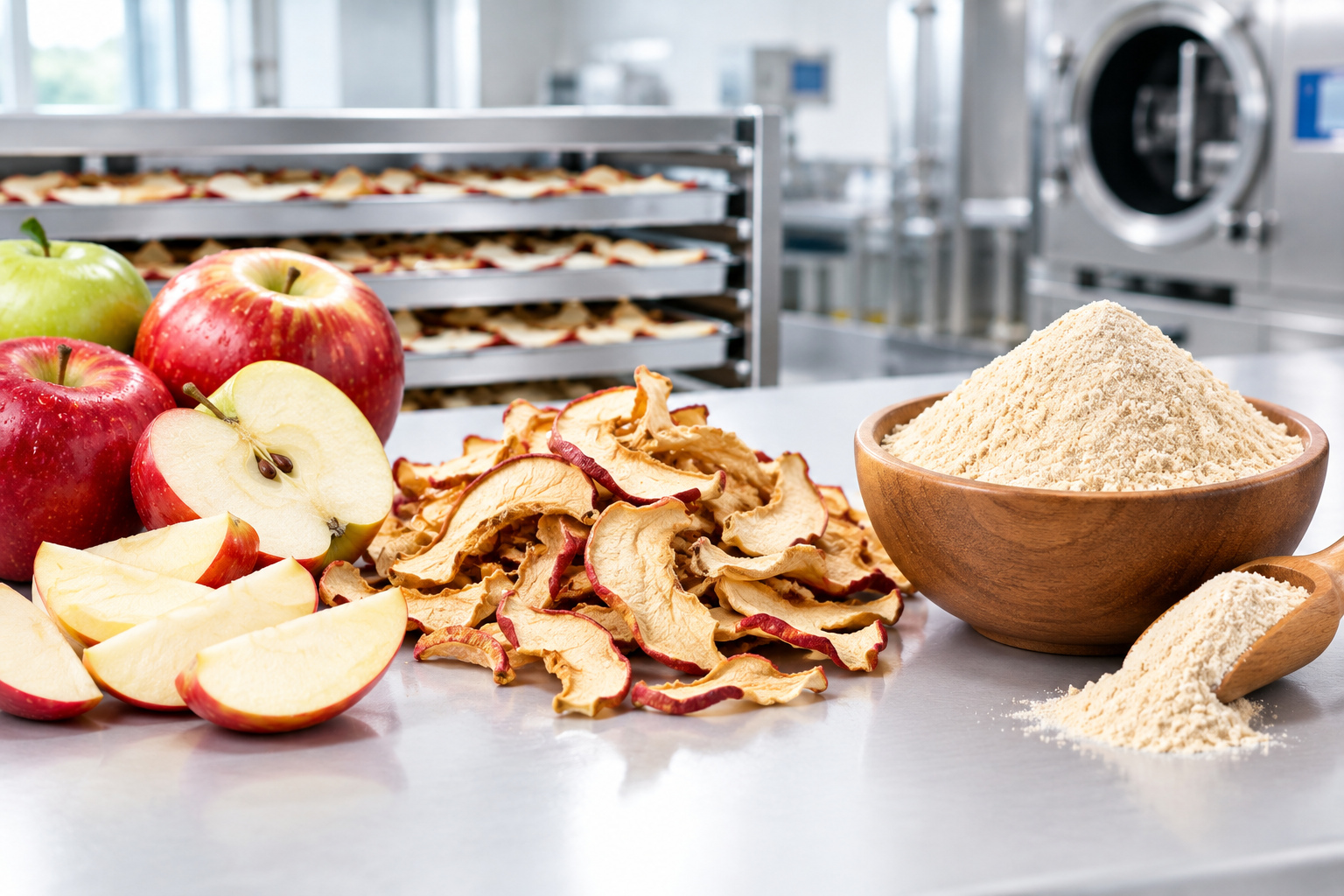
Apple is one of the world’s most widely consumed fruits, valued for its distinctive flavour, aroma, versatility and convenience. While fresh apples remain an important part of the global fruit market, the food industry increasingly requires ingredients that are easier to store, transport, process and incorporate into different products.
Apple powder is one such value-added apple ingredient. Produced by removing moisture from apples and converting the dried fruit into a fine powder, apple powder offers manufacturers a convenient way to incorporate apple flavour, aroma and fruit solids into a wide range of food and beverage formulations.
With the growth of clean-label products, functional food ingredients, bakery products, instant beverages, fruit-based snacks and convenient food formats, apple powder has become an increasingly useful ingredient for both manufacturers and product developers.
For a company such as AgroFreezeDry, advanced drying technology provides an opportunity to transform fresh apples into a stable, convenient and versatile ingredient while supporting value addition and better utilization of fruit.
1. What Is Apple Powder?
Apple powder is a finely processed apple ingredient obtained by removing most of the moisture from apples and subsequently reducing the dried material into a powder.
Depending on the manufacturing process and product specification, apple powder may be produced from:
- Whole apples
- Apple pieces
- Apple pulp
- Apple puree
- Apple juice or concentrated apple material
The final characteristics of apple powder depend on several factors, including the apple variety, maturity, preparation method, drying technology, particle size and packaging conditions. A well-produced apple powder can provide a convenient source of apple flavour and fruit solids for food manufacturers without requiring the handling of fresh fruit during every stage of product formulation.
2. A Brief History of Apples and Apple Preservation
The history of apples goes back thousands of years. Apples originated in Central Asia, particularly around the region of present-day Kazakhstan, and gradually spread through trade, migration and cultivation into Europe and other parts of the world.
Over centuries, apples became an important cultivated fruit in many civilizations.
Before modern refrigeration and industrial food processing, people developed different methods to preserve apples and extend their usability. These included:
- Sun drying
- Air drying
- Cooking
- Making sauces and preserves
- Producing cider
- Storing apples under suitable environmental conditions
Drying was particularly important because reducing the moisture content of fruit could make it easier to preserve and transport.
Traditional fruit drying methods eventually evolved into controlled industrial drying technologies. With advances in food science, manufacturers developed processes capable of producing dried fruit ingredients with more consistent moisture, texture, colour and flavour characteristics.
The development of modern drying technologies—including controlled hot-air drying, spray drying, vacuum drying and freeze-drying—created new possibilities for producing powdered fruit ingredients such as apple powder.
Today, apple powder represents a modern form of fruit preservation and value addition, connecting traditional fruit preservation practices with contemporary food manufacturing requirements.
3. Why Is Apple Powder Becoming Important?
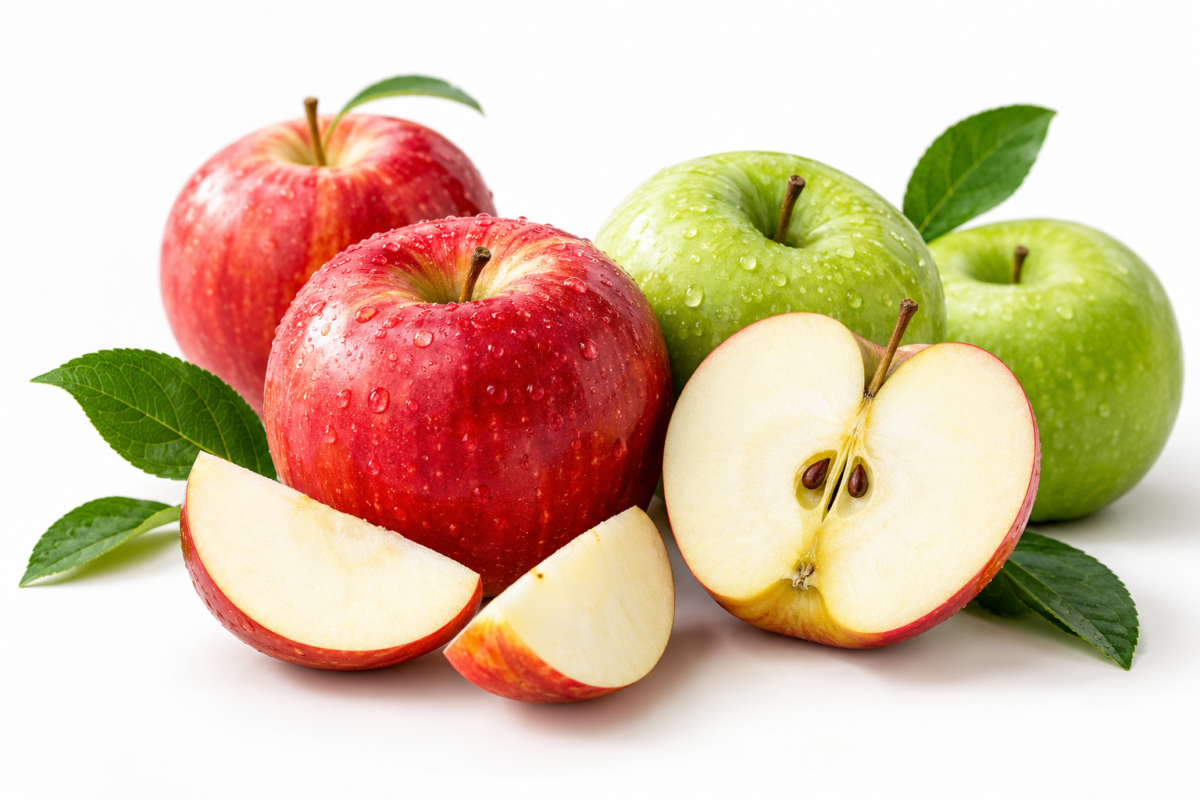
Fresh apples are highly perishable compared with dried apple ingredients. They require appropriate handling, transportation and storage conditions.
For food manufacturers, fresh fruit can also create operational challenges because it requires:
- Regular sourcing
- Cleaning and preparation
- Cold-chain or controlled storage in many situations
- Processing within a suitable period
- Management of seasonal availability
Apple powder provides an alternative ingredient format.
Once appropriately processed and packaged, apple powder can be easier to handle, measure, transport and incorporate into industrial formulations.
This makes it particularly useful for manufacturers who want to develop apple-flavoured or fruit-based products without processing fresh apples at every production stage.
4. How Is Apple Powder Made?
The production process depends on the technology used and the desired characteristics of the final powder.
A typical controlled process can include the following stages:
Step 1: Selection of Apples
Suitable apples are selected based on variety, maturity, quality and intended application.
Raw material quality is extremely important because the characteristics of the finished powder are influenced by the quality of the original fruit.
Step 2: Cleaning
The apples are cleaned to remove dirt and other unwanted materials from the surface.
Step 3: Sorting and Inspection
The fruit is inspected and unsuitable or damaged portions may be removed according to the product specification.
Step 4: Preparation
Depending on the product, apples may be peeled, cored, sliced, pulped or otherwise prepared before drying.
Step 5: Drying
The prepared apple material undergoes a controlled drying process.
One advanced method is freeze-drying, in which the product is frozen and moisture is removed under vacuum through sublimation.
Freeze-drying can be particularly useful when the objective is to produce a lightweight dried ingredient while retaining many of the original characteristics of the fruit.
Step 6: Milling
After drying, the material can be processed into smaller particles using suitable milling equipment.
Step 7: Sieving
The powder may be sieved to achieve the desired particle-size distribution and consistency.
Step 8: Quality Testing
The finished product can be evaluated according to applicable specifications, which may include parameters such as:
- Moisture
- Particle size
- Appearance
- Aroma
- Microbiological quality
- Packaging integrity
Step 9: Packaging
Apple powder should be packed in suitable moisture- and oxygen-protective packaging based on its intended shelf life and storage requirements.
5. Why Freeze-Dried Apple Powder?
Freeze-drying is a dehydration technology used for a variety of fruits and food ingredients.
In freeze-drying, the product is first frozen. Under controlled vacuum conditions, ice is removed primarily through sublimation, allowing moisture to leave the product without passing through a conventional liquid phase.
This process can offer several advantages for fruit ingredients.
Retention of Fruit Characteristics
Freeze-drying can help preserve important characteristics of the raw material, including its structure, aroma and flavour, when the process is appropriately controlled.
Lightweight Ingredient
Removing most of the water significantly reduces the weight of the finished ingredient compared with fresh fruit.
Convenient Handling
Powdered ingredients are easy to portion, measure, blend and incorporate into industrial formulations.
Versatile Format
Apple can be converted into a powder that can be used in multiple food and beverage applications.
Value Addition
Processing fresh apples into a shelf-stable ingredient format can create additional value beyond the fresh-fruit market.
However, the final quality of freeze-dried apple powder depends on raw material quality, processing conditions, milling, packaging and storage. Freeze-drying should therefore be considered as part of an integrated quality-control system rather than as a substitute for good manufacturing practices.
6. Key Characteristics of Apple Powder
The characteristics of apple powder can vary depending on the raw material and processing method.
Typical product characteristics may include:
- Fine or controlled particle size
- Apple-specific aroma
- Apple flavour
- Light to cream-coloured appearance, depending on the raw material and process
- Low moisture compared with fresh apples
- Easy incorporation into dry formulations
- Convenient storage and transportation when appropriately packaged
For B2B applications, manufacturers should define product specifications according to their intended use. Important parameters can include moisture level, particle size, microbiological specifications, packaging format and application requirements.
7. Applications of Apple Powder in the Food Industry
One of the biggest advantages of apple powder is its versatility.
It can be used as an ingredient in different product categories, depending on formulation and technical requirements.
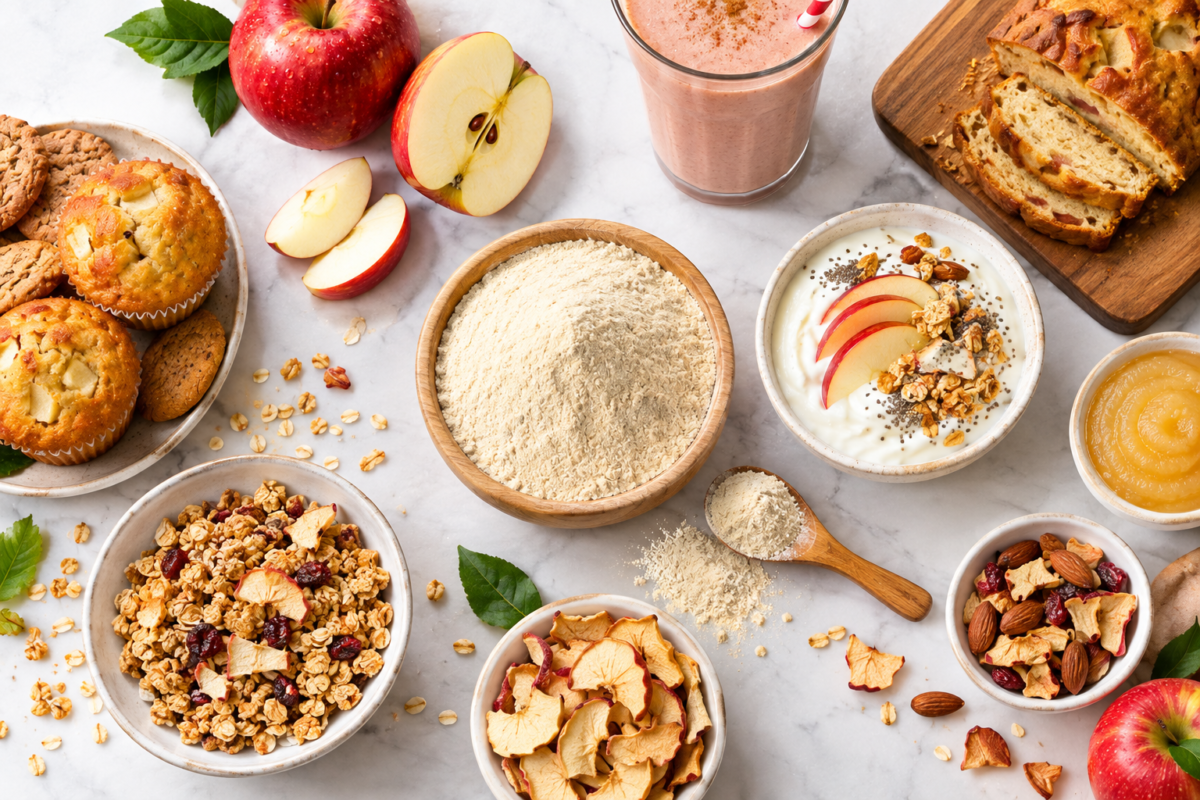
7.1 Bakery Products
Apple powder can be incorporated into various bakery formulations, including:
- Cakes
- Muffins
- Cookies
- Biscuits
- Breads
- Dessert mixes
- Bakery fillings
- Crumble and topping formulations
It can provide an apple-oriented flavour profile while offering manufacturers a convenient dry ingredient.
7.2 Confectionery Products
Apple powder may also be explored in confectionery formulations such as:
- Fruit-flavoured candies
- Gummies
- Fruit-based confectionery
- Coatings
- Dessert toppings
- Flavoured confectionery mixes
The formulation must be optimized according to the product’s moisture, acidity and texture requirements.
7.3 Beverage Applications
Apple powder can be used in selected beverage formulations, including:
- Instant beverage mixes
- Fruit drink powders
- Smoothie mixes
- Flavoured beverage blends
- Functional beverage formulations
- Dry premixes
It can provide a convenient dry form of apple flavour and fruit solids for manufacturers developing powdered beverage products.
7.4 Instant Food Products
The convenience-food sector can use fruit powders in products designed for easy preparation.
Potential applications include:
- Instant breakfast mixes
- Dessert premixes
- Porridge mixes
- Flavoured oats
- Smoothie blends
- Instant snack formulations
7.5 Dairy and Dairy-Alternative Products
Apple powder may be incorporated into selected dairy and plant-based formulations such as:
- Flavoured yoghurt
- Dessert preparations
- Milkshake mixes
- Plant-based beverage formulations
- Dairy-based desserts
The compatibility of apple powder with a particular formulation should be evaluated through product trials.
7.6 Snack Products
The growing market for fruit-based and innovative snacks creates opportunities for apple ingredients.
Apple powder can potentially be used in:
- Snack seasoning blends
- Fruit-based snack products
- Granola
- Cereal bars
- Energy bars
- Trail mixes
- Coated snacks
7.7 Nutritional and Wellness Food Formulations
Fruit powders are also used by product developers in various nutritional food formulations.
Apple powder can be incorporated into selected:
- Nutrition mixes
- Breakfast products
- Meal mixes
- Fruit blends
- Food powders
However, any nutritional or health claim must be supported by appropriate product analysis and comply with applicable food regulations.
8. Apple Powder in Food Product Development
For product developers, powdered ingredients can provide greater formulation flexibility than fresh fruit.
A manufacturer developing an apple-flavoured product can adjust the quantity of powder according to the required:
- Flavour intensity
- Fruit content
- Texture
- Aroma
- Colour
- Formulation characteristics
Apple powder can also be blended with other fruit powders.
For example, product developers may experiment with combinations such as:
Apple + Strawberry
Apple + Cinnamon
Apple + Mango
Apple + Banana
Apple + Beetroot
Such combinations can support the development of innovative food and beverage products.
9. Apple Powder vs Fresh Apple
The choice between fresh apples and apple powder depends on the application.
| Feature | Fresh Apple | Apple Powder |
| Moisture | High | Low |
| Storage | Requires suitable fresh-fruit storage | Requires moisture-protective packaging |
| Handling | Requires washing, cutting and preparation | Convenient dry ingredient |
| Transportation | Heavier due to water content | Lightweight |
| Processing | Requires preparation before use | Can be directly incorporated into suitable formulations |
| Shelf-life considerations | Highly dependent on storage conditions | Generally more convenient when properly processed and packaged |
| Application | Fresh consumption, cooking, processing | Bakery, beverages, mixes, snacks and other formulations |
The comparison does not mean that apple powder replaces fresh apples. Instead, it provides manufacturers with an additional ingredient format.
10. Benefits of Apple Powder for B2B Food Manufacturers
For commercial food manufacturers, ingredient convenience is an important consideration.
Apple powder can provide several operational advantages.
1. Easier Ingredient Handling
Powdered ingredients can be weighed and incorporated into production batches efficiently.
2. Reduced Water Content
The removal of moisture reduces the weight and volume of the ingredient compared with fresh fruit.
3. Convenient Transportation
A dried ingredient can simplify logistics compared with transporting an equivalent quantity of fresh fruit.
4. Formulation Flexibility
Apple powder can be incorporated into numerous dry and semi-dry formulations.
5. Year-Round Ingredient Planning
Appropriately processed and stored dried ingredients can help manufacturers plan production beyond the immediate availability of fresh fruit.
6. Product Innovation
Manufacturers can use apple powder as a building block for developing new food products.
11. Packaging and Storage of Apple Powder
Packaging plays a critical role in maintaining the quality of powdered fruit ingredients.
Because apple powder has low moisture content, exposure to environmental moisture can negatively affect its physical properties.
Suitable packaging should therefore provide protection against:
- Moisture
- Oxygen
- Light, where relevant
- Contamination
- Physical damage
The product should be stored according to the manufacturer’s specified conditions.
Generally, storage should be in a:
- Cool environment
- Dry environment
- Clean area
- Protected location away from direct sunlight
- Properly sealed package
Once a package is opened, appropriate handling is important to minimize moisture absorption.
Actual shelf life depends on the formulation, processing method, packaging system and storage conditions and should be established through appropriate stability and quality testing.
12. Quality Considerations When Buying Apple Powder
B2B buyers should evaluate apple powder based on their specific application rather than considering only price.
Important questions include:
What is the raw material?
Is the powder produced from whole apple, pulp, puree or another apple-derived material?
Which drying technology is used?
Different drying methods can produce different sensory and functional characteristics.
What is the moisture specification?
Moisture is an important parameter for powdered ingredients.
What is the particle size?
Particle size can influence mixing, dispersion and mouthfeel.
What packaging is used?
Packaging should provide appropriate protection against environmental moisture and other factors.
What quality documentation is available?
Commercial buyers may require relevant specifications, certificates and quality documentation depending on their application and regulatory requirements.
13. Apple Powder and the Growing Trend of Fruit-Based Ingredients
The food industry is continuously developing new ways to incorporate fruits into convenient products.
Several trends are supporting interest in fruit-derived ingredients:
- Convenience foods
- Dry beverage mixes
- Fruit-based snacks
- Bakery innovation
- Ingredient simplification
- Shelf-stable formulations
- Value-added agricultural products
- B2B ingredient sourcing
- Product diversification
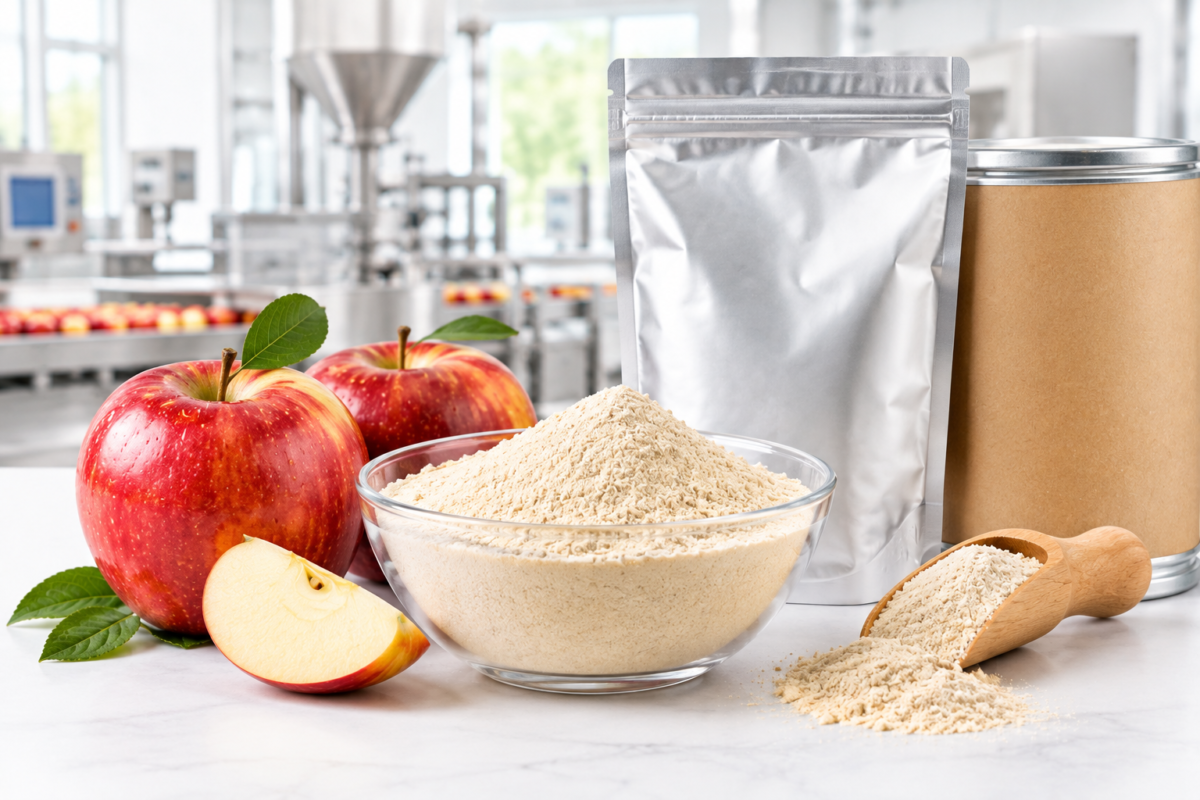
Apple powder fits into this broader movement because it transforms a familiar fruit into a convenient industrial ingredient.
For manufacturers, the opportunity is not limited to using apple powder as a flavouring ingredient. It can also become part of broader product-development strategies involving fruit blends, dry mixes and value-added foods.
14. Apple Powder and Agricultural Value Addition
Processing fruits into powders can contribute to value addition within the agricultural supply chain.
Instead of selling apples only as fresh produce, processors can develop additional product formats.
The value chain can involve:
Apple Grower → Raw Fruit → Processing → Drying → Milling → Apple Powder → B2B Manufacturer → Finished Food Product → Consumer
This creates opportunities for businesses operating across different stages of the food-processing ecosystem. Value-added processing can also allow companies to develop specialized ingredients for particular industrial requirements.
15. Potential B2B Buyers of Apple Powder
Apple powder can be relevant to a broad range of commercial buyers, including:
- Bakery manufacturers
- Beverage companies
- Snack manufacturers
- Food ingredient companies
- Confectionery manufacturers
- Cereal manufacturers
- Nutrition-food companies
- Dessert manufacturers
- Instant-food manufacturers
- Flavour and formulation companies
- Food-service ingredient suppliers
- Private-label food brands
The exact suitability depends on the technical specifications and intended formulation.
16. Why Choose Freeze-Dried Fruit Ingredients?
For businesses working with premium fruit ingredients, processing technology is an important consideration.
Freeze-drying can provide a controlled method of moisture removal while aiming to preserve desirable characteristics of the original fruit.
At AgroFreezeDry, the focus is on converting agricultural produce into convenient, value-added ingredients through advanced freeze-drying technology.
The objective is to create products suitable for modern food applications while maintaining appropriate quality, consistency and handling characteristics.
17. Apple Powder: From Fruit to Functional Ingredient Format
The journey of apple powder demonstrates how food processing can transform a traditional agricultural product into a modern ingredient.
The process begins with fresh apples and ends with a concentrated, lightweight and convenient powder that can be incorporated into a variety of formulations.
This transformation offers benefits across the value chain:
For growers:
Potential opportunities for value-added markets.
For processors:
Opportunities to create differentiated fruit ingredients.
For food manufacturers:
A convenient ingredient format for product development.
For consumers:
Access to innovative products containing fruit-derived ingredients.
18. The Future of Apple Powder
The future of apple powder is closely connected with the evolution of the food-processing and ingredient industries.
As manufacturers continue to develop convenient foods, powdered beverages, innovative snacks, bakery products and specialized food formulations, demand for versatile fruit ingredients may continue to create opportunities.
Advanced processing technologies can further improve consistency, handling and application possibilities.
For businesses involved in agricultural processing, the opportunity lies in moving beyond conventional fresh-fruit sales and developing value-added ingredients with specific B2B applications.
Apple powder is one example of how familiar agricultural products can be transformed into commercially useful food ingredients.
Conclusion
Apple powder combines the familiar characteristics of apples with the convenience of a dry ingredient format. Its applications extend across bakery, beverages, snacks, confectionery, instant foods, desserts and other food formulations.
The development of modern drying technologies has expanded the possibilities for producing high-quality powdered fruit ingredients. Among these technologies, freeze-drying offers an advanced approach to moisture removal and can help retain important characteristics of fruit when appropriately processed.
For food manufacturers and ingredient buyers, apple powder can offer advantages in handling, formulation flexibility, transportation and product development.
At AgroFreezeDry, we believe that agricultural products can be transformed into innovative, convenient and value-added ingredients through appropriate processing technology.
From fresh fruit to a versatile ingredient, apple powder represents the potential of modern food processing to create new possibilities across the agricultural and food industries.
Explore B2B Apple Powder Solutions with AgroFreezeDry
Looking for freeze-dried apple powder or customized fruit-based ingredients for your food manufacturing business?
AgroFreezeDry works in the area of freeze-dried fruit and vegetable ingredients for B2B applications.
Whether you are developing bakery products, beverages, snacks, food mixes or other innovative formulations, choosing the right ingredient specifications and processing method is an important part of product development.
Contact AgroFreezeDry to discuss your B2B fruit ingredient requirements.