

Blog
“From Fresh Chikoo to Freeze-Dried Innovation: Exploring Sapota’s Potential”

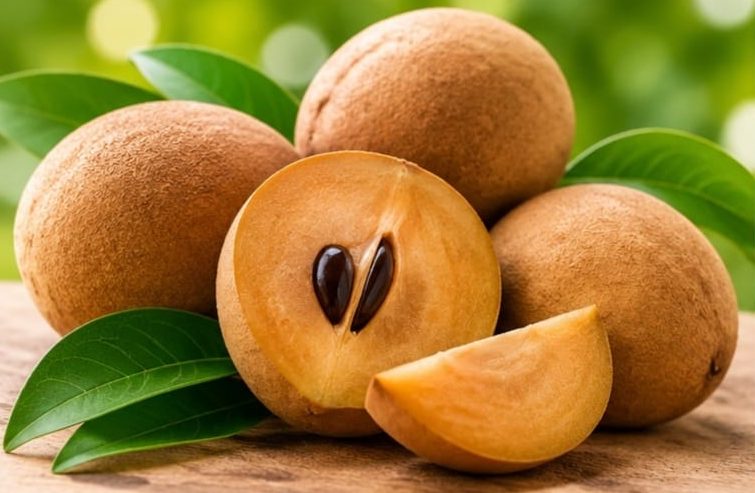
Sapota, commonly known as chikoo, is a tropical fruit loved for its naturally sweet taste, soft texture, and distinctive aroma. Popular in India, this fruit is consumed fresh and widely used in milkshakes, smoothies, ice creams, desserts, and other food preparations.
However, fresh sapota has a relatively short shelf life and requires careful handling during storage and transportation. Its high moisture content makes it susceptible to spoilage, creating challenges for food processors and businesses looking to use the fruit throughout the year.
Freeze-drying offers an advanced food preservation solution by removing moisture from frozen sapota under controlled vacuum conditions. This technology helps produce lightweight, low-moisture fruit ingredients that can be used in various food applications.
For food manufacturers, ingredient suppliers, and product developers, freeze-dried sapota presents an opportunity to explore the potential of this naturally sweet tropical fruit in value-added food products.
A Brief History of Sapota (Chikoo)
Sapota, scientifically known as Manilkara zapota, originated in southern Mexico, Central America, and parts of the Caribbean. Historically, the tree was valued for its sweet fruit and for chicle, a natural latex obtained from its bark that was traditionally used in chewing gum production.
Over time, sapota spread to tropical regions worldwide, including India, where it adapted well to warm climatic conditions. Today, chikoo is cultivated in several Indian states, including Maharashtra, Gujarat, Karnataka, and Tamil Nadu.
Traditionally consumed fresh, sapota is now also used in processed food products, creating opportunities for value addition through fruit pulp, powders, and modern preservation technologies such as freeze-drying.
What Is Freeze-Dried Sapota?
Freeze-dried sapota is chikoo fruit processed using a preservation technique known as freeze-drying or lyophilization.
In this process, the fruit is first frozen. It is then placed under vacuum, allowing the frozen water to transform directly into water vapour through sublimation. A secondary drying stage helps remove additional moisture.
Unlike conventional hot-air drying, freeze-drying operates at low product temperatures during the primary drying stage. When appropriately controlled, this can help retain the fruit’s characteristic flavour, aroma, colour, and structure.
Depending on the intended application, freeze-dried sapota can be developed into different formats, such as:
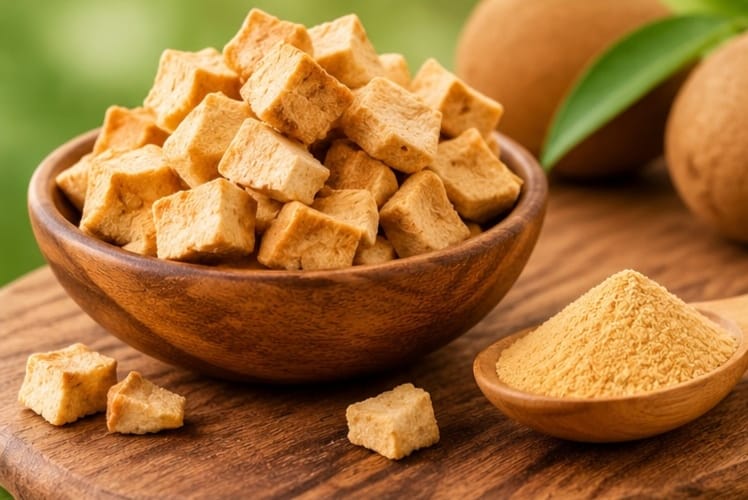
- Freeze-dried sapota pieces and slices
- Freeze-dried sapota granules
- Freeze-dried sapota powder
These formats can be evaluated for different food formulations according to their texture, flavour, and functional requirements.
How Is Sapota Freeze-Dried?
Producing quality freeze-dried sapota involves several carefully controlled processing stages.
1. Selection of Fresh Sapota
Fresh, mature, good-quality sapota fruits are selected for processing. Fruit maturity and freshness influence the sweetness, aroma, texture, and overall quality of the final product.
2. Washing and Preparation
The fruits are washed thoroughly to remove dirt and surface impurities. They are then peeled, and the seeds are removed. The edible portion is cut into suitable pieces or prepared according to the required product format.
3. Freezing
The prepared sapota is frozen under controlled conditions. This step converts the moisture in the fruit into ice, preparing it for the freeze-drying process.
4. Primary Drying
During primary drying, the frozen fruit is exposed to vacuum conditions. The ice is removed through sublimation, reducing the fruit’s moisture content while helping preserve its structure.
5. Secondary Drying
Secondary drying removes additional moisture remaining in the product. The drying conditions are selected to achieve the desired moisture content and water activity for the intended application.
6. Packaging and Storage
The processed sapota undergoes appropriate quality checks before packaging. Moisture-resistant packaging is essential because freeze-dried products can readily absorb moisture from the surrounding environment
Key Benefits of Freeze-Dried Sapota
1. Helps Preserve Natural Fruit Characteristics
Freeze-drying uses low product temperatures during primary drying. When properly processed and stored, it can help retain important characteristics of sapota, including its distinctive flavour and aroma.
2. Lightweight and Convenient
Removing moisture significantly reduces the weight of the fruit. This creates a convenient ingredient format for handling, storage, transportation, and selected food manufacturing applications.
3. Naturally Sweet Ingredient
Sapota has a naturally sweet flavour that makes it suitable for exploring different fruit-based formulations. Its sweetness can complement desserts, bakery products, smoothie mixes, and other food preparations.
However, the amount of added sugar required in a finished product depends on the formulation.
4. Reduced Moisture Content
Freeze-drying substantially reduces moisture, helping limit many moisture-related deterioration processes. The actual shelf life depends on water activity, packaging quality, storage conditions, and product testing.
5. Versatile Applications
Freeze-dried sapota can be processed into pieces, granules, or powder for use in different food categories. This versatility allows manufacturers to explore new product formulations.
6. Opportunities for Value Addition
Freeze-drying provides a way to develop value-added ingredients from a traditionally fresh fruit. It can support innovation in processed foods, fruit-based mixes, and specialised ingredient applications.
Food Industry Applications of Freeze-Dried Sapota
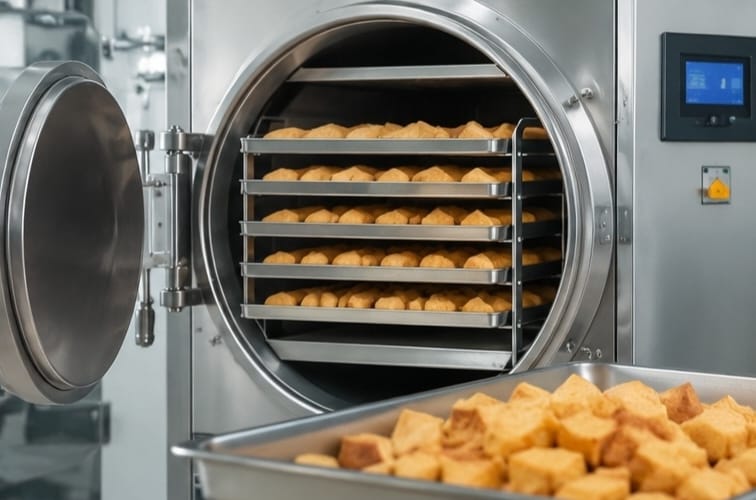
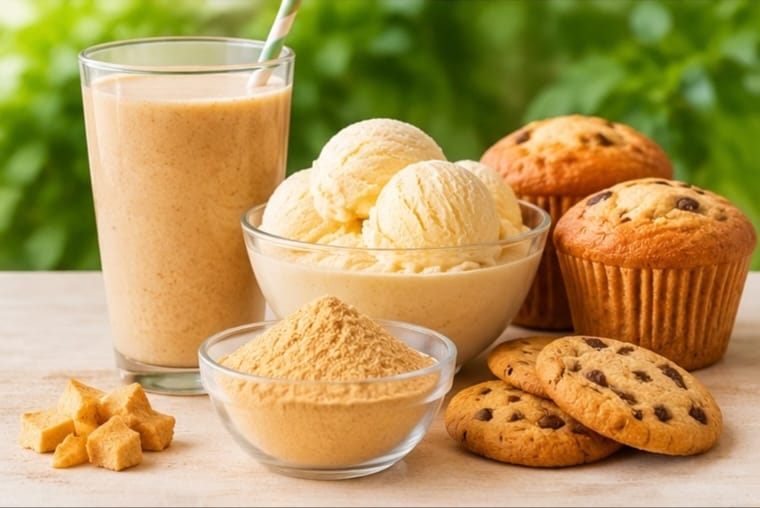
Freeze-dried sapota has potential applications across several food categories, depending on the product format and formulation requirements.
1. Bakery and Confectionery
Sapota pieces and powder can be evaluated for use in:
- Cakes and muffins
- Cookies and biscuits
- Dessert toppings
- Sweet fillings
- Specialty confectionery products
Its distinctive flavour can help manufacturers develop fruit-inspired bakery and confectionery products.
2. Smoothies and Beverage Mixes
Freeze-dried sapota powder may be used in selected smoothie mixes, fruit beverage blends, and dry drink formulations.
The powder’s particle size, dispersibility, sweetness, and flavour intensity should be assessed to ensure compatibility with the intended beverage.
3. Dairy Products and Frozen Desserts
Sapota is already popular in milkshakes and ice creams. Freeze-dried sapota ingredients may offer additional formulation opportunities in:
- Ice creams and frozen desserts
- Milkshake mixes
- Dessert premixes
- Flavoured dairy preparations
- Selected plant-based desserts
Product testing is important to evaluate flavour, texture, and moisture interactions.
4. Breakfast Cereals and Snack Products
Freeze-dried sapota pieces or granules may be considered for breakfast cereals, granola blends, snack mixes, and fruit-based toppings.
Their lightweight format can be useful in dry food applications. However, suitable packaging is necessary to prevent moisture absorption and loss of crispness.
5. Nutritional and Specialty Food Products
Freeze-dried sapota powder may be explored as an ingredient in selected nutritional mixes and specialty food formulations. Any nutritional or health claims must be supported by appropriate testing and comply with applicable food regulations.
6. Food Ingredient Manufacturing
Food ingredient manufacturers can evaluate freeze-dried sapota for customised formulations requiring a distinctive tropical fruit flavour.
Potential applications include fruit blends, dessert ingredients, dry mixes, and private-label food products, subject to product specifications and commercial feasibility.
Freeze-Dried Sapota vs. Fresh Sapota
Fresh and freeze-dried sapota serve different purposes in the food supply chain.
| Feature | Fresh Sapota | Freeze-Dried Sapota |
| Moisture content | High | Significantly reduced |
| Weight | Relatively high | Lightweight |
| Handling | Requires careful handling | Convenient for dry-ingredient applications |
| Preparation | Peeling and seed removal may be required | Can be supplied in a ready-to-use processed format |
| Storage | Requires appropriate fresh-fruit storage | Requires moisture-protective packaging |
| Applications | Fresh consumption and immediate processing | Dry mixes, toppings, powders, and selected formulations |
| Shelf life | Relatively limited and storage-dependent | Can be extended with suitable packaging and validated storage conditions |
Freeze-dried sapota is not a replacement for fresh fruit in every application. Instead, it offers an alternative for businesses seeking a convenient, low-moisture fruit ingredient.
Quality Considerations for Freeze-Dried Sapota
Quality control is essential to ensure that freeze-dried sapota meets the requirements of food manufacturers and ingredient buyers.
Important quality parameters include:
Raw Material Quality: Freshness, maturity, sweetness, and freedom from visible spoilage affect the final product.
Moisture Content and Water Activity: These parameters influence product stability and should be verified using suitable testing methods.
Colour and Flavour: Appropriate processing and storage help minimise undesirable changes in the fruit’s sensory characteristics.
Texture and Particle Size: Pieces, granules, and powders should meet the intended application and buyer specifications.
Microbiological Quality: Hygienic processing and appropriate testing are essential. Freeze-drying does not sterilise the fruit.
Packaging Quality: Effective moisture barriers and proper sealing help protect the product during storage and transportation.
Traceability: Batch records, product specifications, and certificates of analysis may be required for commercial supply.
Packaging and Storage Requirements
Freeze-dried sapota can absorb moisture from the air, which may affect its texture, appearance, and stability.
Suitable moisture-barrier packaging is therefore essential to protect the product. Depending on the formulation and storage requirements, additional protection against oxygen and light may also be beneficial.
The product should be stored under validated conditions, and opened packages should be resealed promptly according to the supplier’s instructions.
A specific shelf-life period should be stated only when supported by appropriate testing and packaging validation.
Business Opportunities in Freeze-Dried Sapota
The demand for convenient food ingredients and value-added fruit products creates opportunities for businesses to explore freeze-dried sapota.
Potential business opportunities include:
- Supplying freeze-dried fruit ingredients to food manufacturers.
- Developing sapota powder for selected beverage and dessert formulations.
- Creating innovative fruit-based bakery ingredients.
- Exploring sapota-based dry mixes and snack products.
- Developing customised fruit blends for food processing businesses.
- Supplying ingredients for private-label and specialty food products.
Before investing in commercial production, businesses should assess raw material availability, seasonal procurement, processing yield, production costs, packaging requirements, quality standards, and buyer demand.
For B2B buyers, evaluating product samples, technical specifications, application performance, and supply consistency can help determine whether freeze-dried sapota is suitable for a particular food product.
Why Explore Freeze-Dried Fruit Ingredients with AgroFreezeDry?
AgroFreezeDry focuses on freeze-dried fruit products and food ingredient opportunities. Businesses exploring fruit-based ingredients can evaluate their requirements according to the intended application, desired format, and product specifications.
Food manufacturers and prospective buyers may discuss:
- Required fruit format, such as pieces or powder.
- Intended food application.
- Desired product specifications.
- Packaging and supply requirements.
- Sample evaluation and product development needs.
Product availability, minimum order quantities, technical specifications, and commercial terms should be confirmed directly with the supplier.
Conclusion
Sapota, commonly known as chikoo, is a naturally sweet tropical fruit with potential applications beyond fresh consumption. Freeze-drying offers a way to transform this perishable fruit into a lightweight, low-moisture ingredient suitable for exploring different food formulations.
From bakery products and smoothie mixes to desserts, snacks, and specialised food ingredients, freeze-dried sapota presents opportunities for product innovation and value addition.
Successful commercial use depends on appropriate raw material selection, controlled processing, quality testing, moisture-resistant packaging, and application-specific product development.
For food manufacturers and B2B buyers, freeze-dried sapota is an ingredient worth exploring as part of the growing value-added fruit processing sector.