

Blog
Guava: History, Nutritional Value, Cultivation and Its Growing Importance in the Food Industry

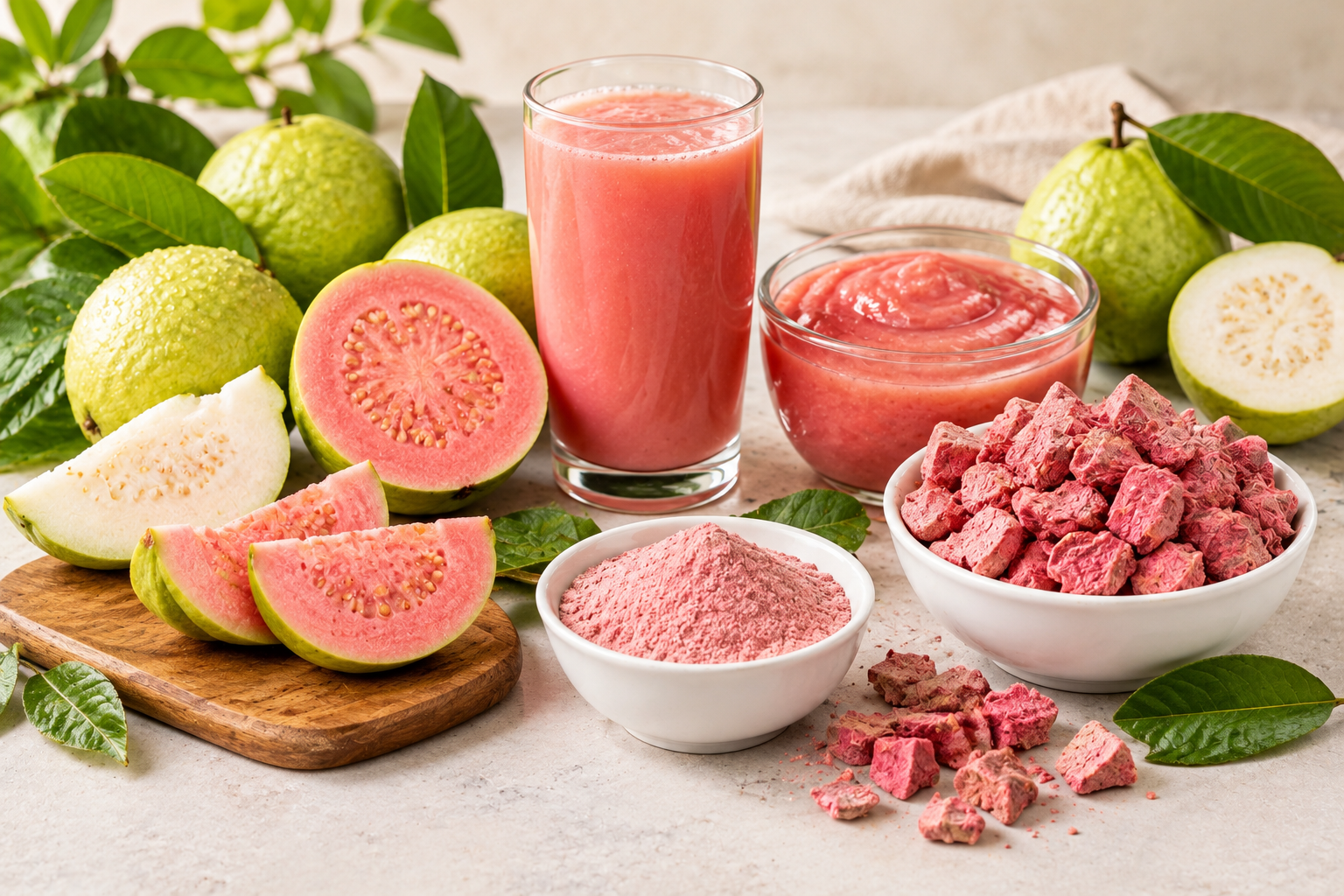
Guava, scientifically known as Psidium guajava L., is one of the most popular tropical fruits in the world. Known for its distinctive aroma, refreshing taste, and nutritional richness, guava is widely consumed in fresh and processed forms. Its versatility makes it an important fruit for households, farmers, food manufacturers, and businesses involved in fruit processing.
From traditional fruit markets to modern food manufacturing facilities, guava has established its place in a wide range of products, including juices, pulp, jams, jellies, confectionery, fruit snacks, and powdered fruit ingredients.
The fruit is particularly valued for its vitamin C content and dietary fibre. Its characteristic flavour and availability in different varieties also make it suitable for several culinary and industrial applications.
As consumer preferences evolve and the food industry explores more value-added agricultural products, guava continues to offer opportunities for innovation, product development, and commercial growth.
1. The Origin and History of Guava
Guava has its origins in tropical America, particularly in regions of Central America, the Caribbean, Mexico, and northern South America. Historical and botanical research identifies these areas as the native range of the fruit.
For centuries, indigenous communities used guava as a food source. The fruit was appreciated for its pleasant taste, edible flesh, and adaptability to tropical environments. Guava trees could grow in a variety of conditions, making the fruit accessible to communities across different landscapes.
As international trade and migration expanded, guava gradually spread to other tropical and subtropical regions. It became established in parts of Asia, Africa, and the Pacific, where the climate supported its growth.
Over time, guava developed into an important fruit in many regional food cultures. It was consumed fresh and incorporated into traditional preparations, beverages, preserves, and desserts.
The introduction and growth of guava in India
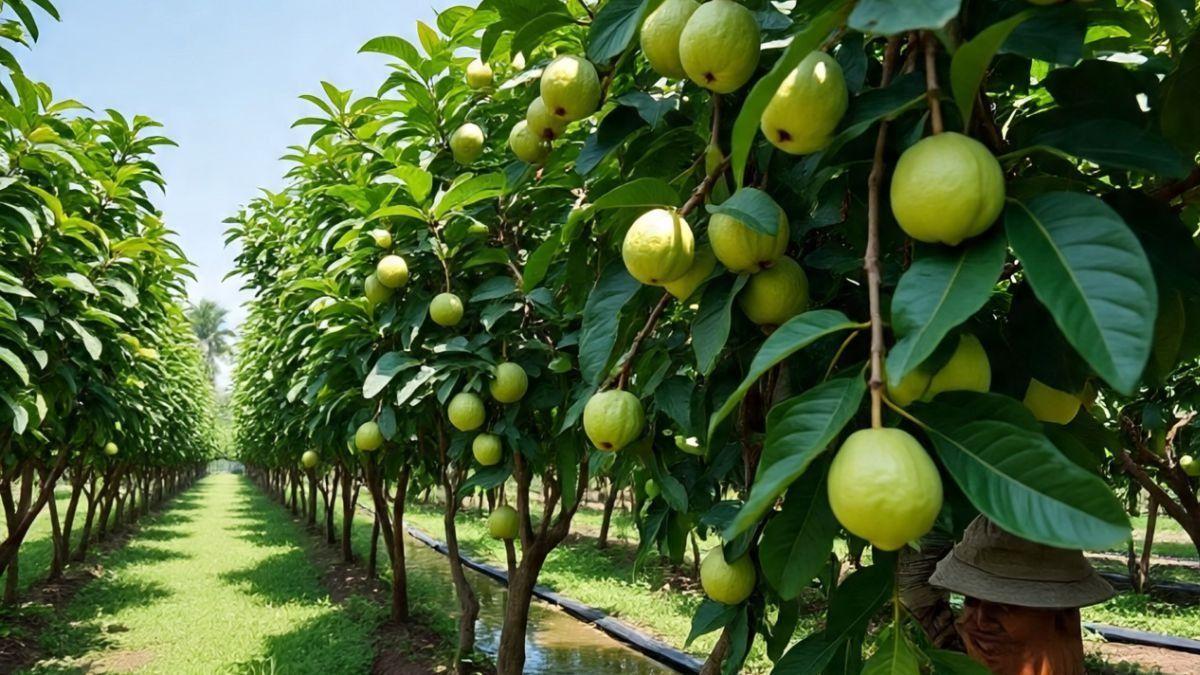
Guava is now one of India’s familiar and widely cultivated fruits. It is grown in orchards, agricultural fields, and home gardens across several states. Its adaptability to different growing conditions and its popularity among consumers have contributed to its commercial importance.
In India, guava is commonly eaten fresh, sometimes with salt and spices. It is also used to prepare juices, fruit beverages, jams, jellies, chutneys, and other food products.
The expansion of fruit processing has further increased guava’s importance by creating demand for pulp and other fruit-based ingredients.
Although guava originated in the Americas, it has become deeply integrated into India’s agricultural economy and everyday food habits.
2. Botanical Characteristics of Guava
Guava belongs to the Myrtaceae family and grows as a shrub or small tree. The plant produces aromatic fruits that vary in shape, size, skin colour, flesh colour, and flavour.
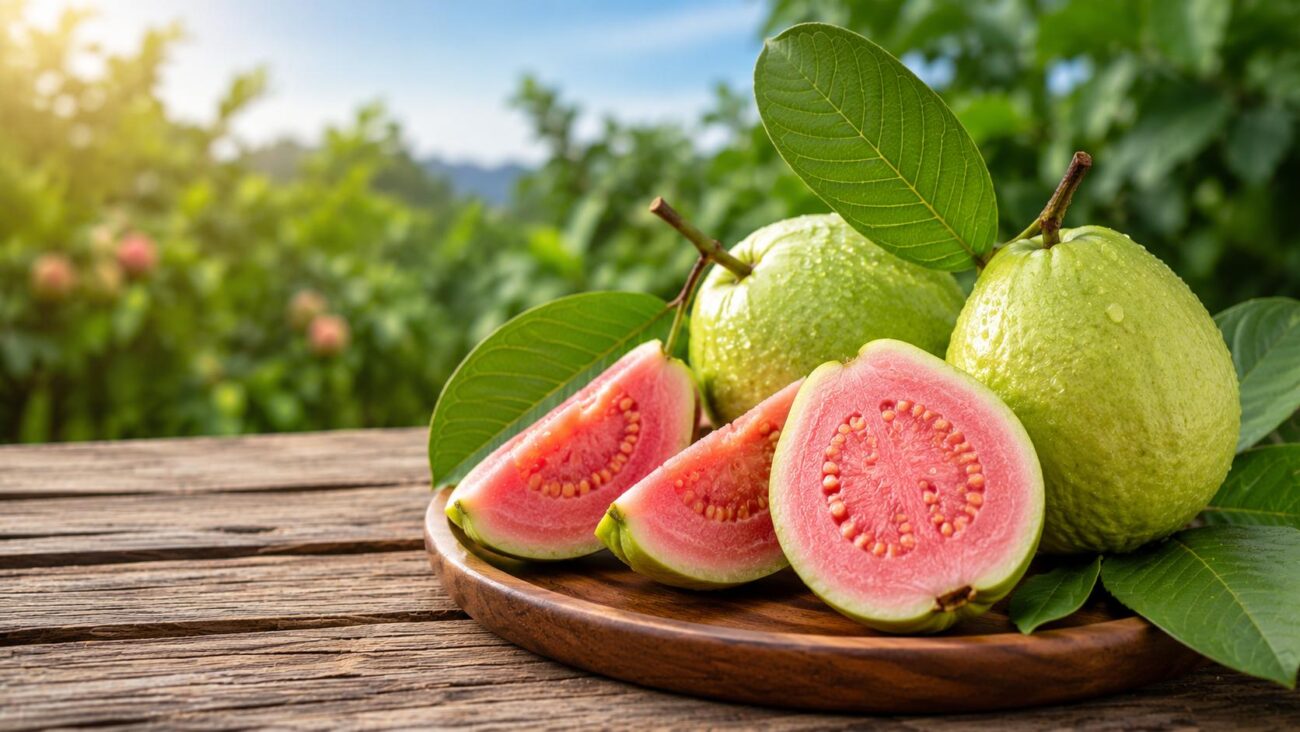
Depending on the variety, guava flesh may be white, cream-coloured, pink, or red. Some varieties have a sweeter taste, while others offer a more pronounced balance of sweetness and acidity.
The fruit generally contains numerous small seeds embedded in its flesh. Its distinctive fragrance and softening texture during ripening contribute to its popularity.
Key characteristics of guava
- Scientific name: Psidium guajava L.
- Family: Myrtaceae
- Fruit category: Tropical fruit
- Native region: Tropical America
- Flesh colours: White, cream, pink, and red
- Flavour: Sweet, aromatic, and mildly acidic
- Common uses: Fresh consumption, beverages, fruit pulp, preserves, confectionery, and processed food products
These characteristics influence the fruit’s suitability for different markets and processing applications.
3. Major Guava-Producing Regions in India
India is an important producer of guava, and the fruit is cultivated across many agricultural regions.
Major guava-producing states include Uttar Pradesh, Madhya Pradesh, Bihar, Maharashtra, Andhra Pradesh, Gujarat, Karnataka, and Tamil Nadu, among others. Production volumes and rankings vary according to the agricultural year.
Different regions grow varieties suited to their climatic conditions, local preferences, and commercial markets.
Guava cultivation in Maharashtra
Maharashtra provides suitable growing conditions for guava in several districts. Farmers cultivate the fruit for local consumption, regional markets, and commercial distribution.
Guava cultivation can support agricultural livelihoods through activities such as orchard management, harvesting, grading, packaging, transportation, and marketing.
The fruit’s value extends beyond the farm. Traders, wholesalers, retailers, processors, and food manufacturers all contribute to the supply chain.
However, growers must manage challenges such as changing weather conditions, pest and disease pressure, fruit quality, post-harvest losses, and fluctuations in market prices.
Developing reliable market connections and exploring suitable processing opportunities can help agricultural businesses identify additional ways to commercialise their produce.
4. Popular Varieties of Guava
Several guava varieties are cultivated in India, each with distinct characteristics that influence consumer preference and commercial use.
Allahabad Safeda
Allahabad Safeda is a well-known Indian guava variety. It is recognised for its pale skin, white flesh, and sweet flavour. It is commonly associated with fresh consumption and has also been used in fruit-processing applications.
Lalit
Lalit is a variety known for its pink-coloured flesh and attractive fruit characteristics. Its appearance makes it an interesting option for fresh markets and selected processed products.
Shweta
Shweta is another guava variety cultivated in India. Its fruit characteristics and suitability depend on the growing region and orchard management practices.
Arka Mridula
Arka Mridula is a variety developed through agricultural research and is recognised for its fruit quality. It is grown in suitable regions for fresh-fruit markets.
Pink-fleshed guava varieties
Pink- and red-fleshed guavas are particularly interesting for products where natural fruit colour and distinctive appearance are desirable.
The most suitable variety for commercial processing depends on factors such as pulp yield, seed content, flavour, acidity, colour, maturity, and the specifications of the intended final product.
5. Nutritional Value of Guava
Guava is widely recognised for its vitamin C content and provides dietary fibre, carbohydrates, and several vitamins and minerals.
Its nutritional composition varies depending on the variety, growing conditions, maturity, and handling after harvest.
Vitamin C
Guava is an important dietary source of vitamin C. This nutrient contributes to normal immune function, collagen formation, wound healing, and protection of cells from oxidative stress.
Dietary fibre
The fruit contains dietary fibre, which supports normal digestive function and contributes to a balanced diet.
Antioxidant compounds
Guava contains naturally occurring plant compounds, including phenolic substances. Pink-fleshed varieties may also contain lycopene, a carotenoid responsible for some of their characteristic colour.
Potassium and folate
Guava provides potassium, which contributes to normal muscle and nerve function, as well as folate, which supports normal cell division and other physiological functions.
Natural carbohydrates
Naturally occurring sugars contribute to guava’s sweetness and provide energy.
The fruit can be a useful addition to a varied and balanced diet. However, the nutrient content of a processed guava product may differ from that of fresh fruit, depending on the ingredients and processing conditions.
6. Traditional and Commercial Uses of Guava
Guava’s distinctive flavour and versatile characteristics make it suitable for a wide range of food products.
Fresh fruit consumption
Fresh guava remains one of the most common ways to enjoy the fruit. It is eaten as a snack, served with salt and spices, or included in fruit salads.
Its accessibility and familiar flavour make it popular among consumers across different age groups.
Guava juice and beverages
Guava is used in juices, nectars, smoothies, fruit drinks, and blended beverages. Its characteristic aroma can contribute a distinctive tropical flavour to beverage formulations.
Manufacturers may combine guava with other fruits to develop different flavour profiles.
Guava pulp and puree
Guava pulp and puree are important ingredients in food manufacturing. They can be used in beverages, fruit preparations, sauces, desserts, and other formulations.
The quality of pulp depends on the fruit variety, maturity, processing conditions, and storage practices.
Jam and jelly
Guava is used to prepare jams, jellies, and fruit spreads. These products provide a convenient way to enjoy the fruit’s flavour beyond its fresh season.
Guava confectionery
Guava-based sweets, fruit bars, fruit leather, and other confectionery products are popular in several markets.
These products demonstrate how a traditional fruit can be transformed into convenient, marketable food formats.
Bakery and dessert applications
Guava can be incorporated into cake fillings, pastries, biscuits, desserts, and other bakery products. Its flavour pairs well with different ingredients, creating opportunities for product development.
7. Guava in the Modern Food-Processing Industry
The food-processing industry plays an important role in expanding the commercial applications of agricultural produce.
Guava is a useful raw material because it can be developed into several products with different textures, flavours, and applications.
Processed guava ingredients are used by beverage manufacturers, bakeries, confectionery producers, dessert manufacturers, and other food businesses.
Value addition through fruit processing
Value addition involves converting agricultural produce into products that offer additional convenience, functionality, or commercial opportunities.
For guava, this may include producing pulp, puree, beverages, preserves, dried fruit, and fruit powders.
Different product formats can serve different customer segments. Fresh fruit is generally directed towards retail markets, while processed ingredients can supply manufacturers that require consistent fruit-based inputs.
Processing also creates opportunities for businesses to explore markets beyond the immediate area of cultivation.
However, product quality, processing costs, packaging, storage, and market demand all influence commercial feasibility.
8. Guava Powder and Its Industrial Applications
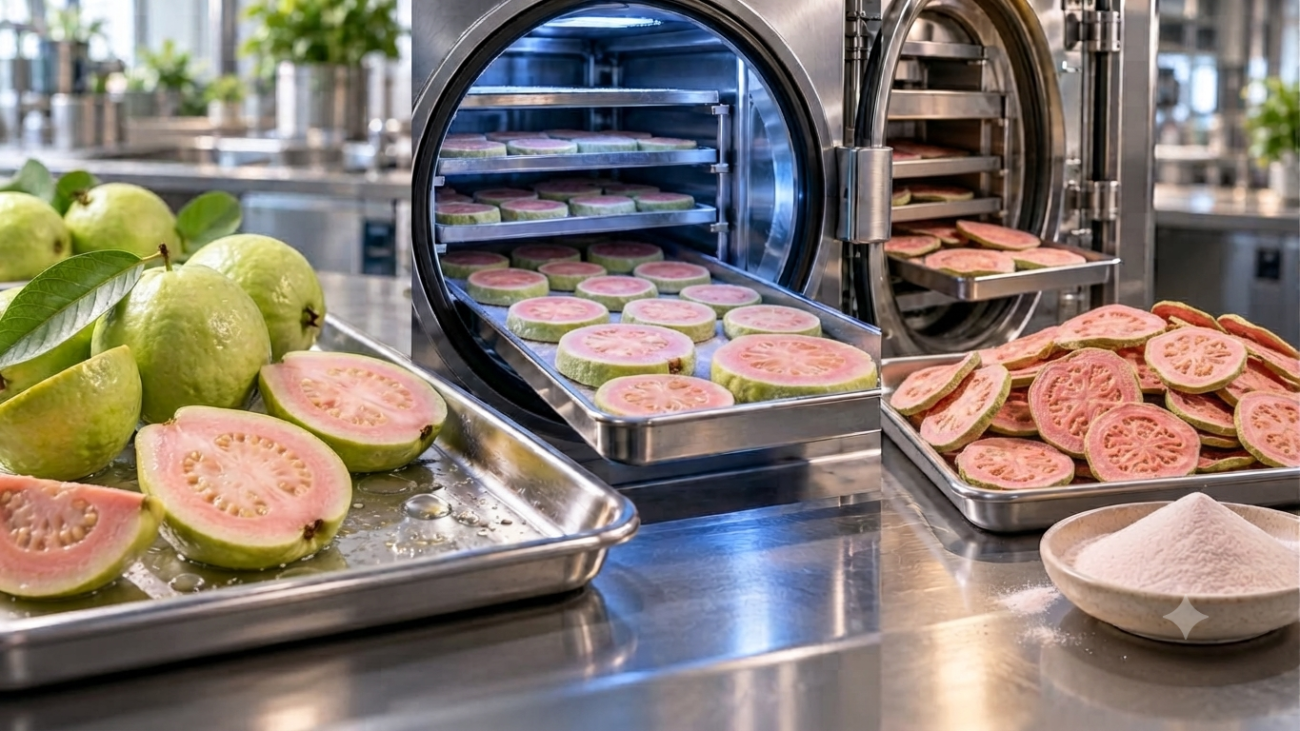
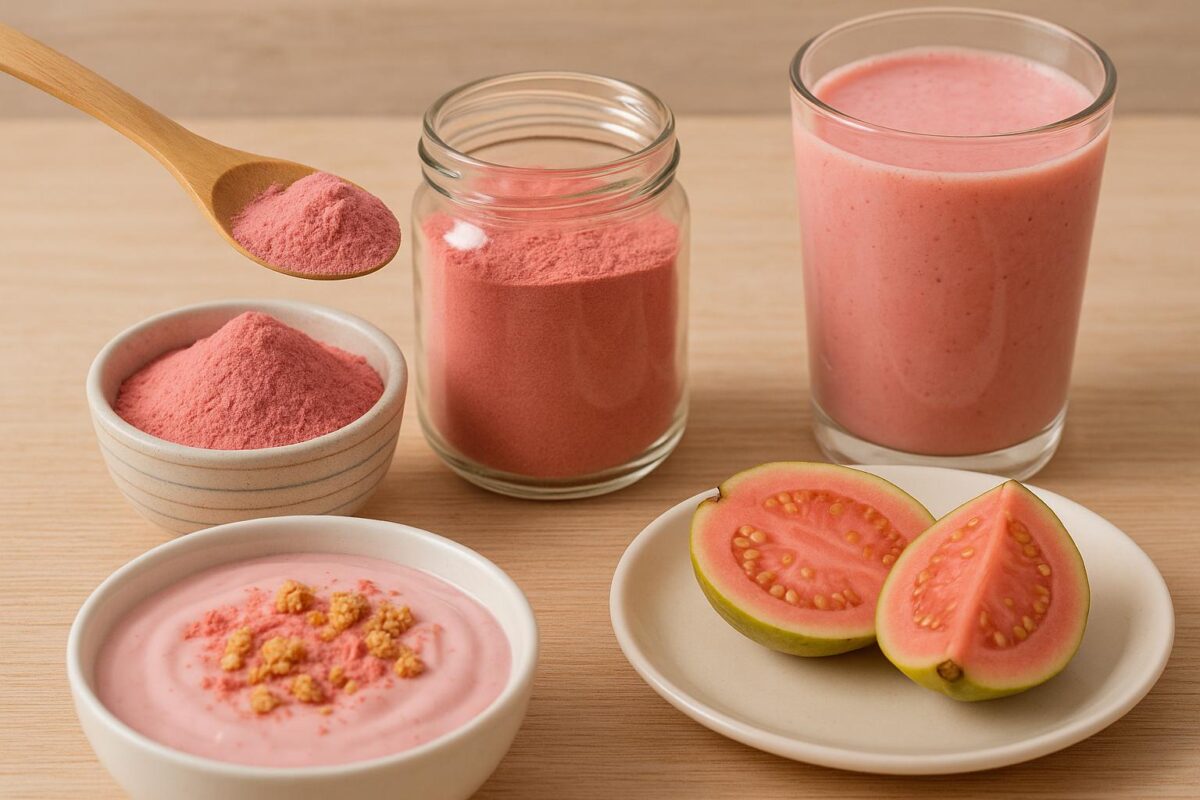
Guava powder is a convenient ingredient for incorporating guava flavour into selected food products. Depending on its production method and composition, it may be manufactured from fruit pulp, puree, or other suitable guava material.
The characteristics of the finished powder depend on the raw material, processing method, and any additional ingredients.
Applications of guava powder
Beverage mixes: Guava powder can be used in selected instant drink mixes and fruit-flavoured beverage formulations.
Bakery products: It can contribute guava flavour to cookies, cakes, biscuits, and bakery premixes.
Breakfast cereals: Fruit powder can be incorporated into selected cereal blends, granola, and other breakfast products.
Dairy and dessert preparations: Guava powder may be used in yoghurt preparations, dessert mixes, ice cream formulations, and other suitable products.
Confectionery: It can contribute fruit flavour to sweets, fruit bars, and selected confectionery formulations.
Food ingredient blends: Manufacturers may combine guava powder with other fruit ingredients to create customised flavour blends.
Before selecting a powder, industrial buyers should review its ingredient composition, moisture content, water activity, particle size, colour, flavour, microbiological specifications, and intended applications. Not all guava powders have the same characteristics, so evaluating product specifications and samples is important.
9. Importance of Quality and Packaging in Guava Products
Quality management is essential throughout the guava supply chain, from harvesting to the finished product.
Fresh fruit quality affects the flavour, appearance, and suitability of processed ingredients. Careful sorting, hygienic handling, and appropriate storage help maintain raw material quality.
For processed guava products, manufacturers must consider several factors.
Raw material selection
Fruit should be selected according to the intended application. Factors such as maturity, flavour, colour, pulp yield, and visible defects can affect the final product.
Food safety
Suitable sanitation, hygienic handling, controlled processing conditions, and appropriate testing are essential for food safety.
Packaging
Packaging protects the product from external contamination and environmental conditions. The appropriate packaging material depends on the product’s moisture sensitivity, storage requirements, distribution conditions, and intended shelf life.
Storage and shelf life
Processed guava products require storage conditions suited to their characteristics. Shelf life should be established through appropriate testing and quality evaluation.
Consistency
These considerations are important for businesses supplying guava ingredients to domestic and international food markets.
Food manufacturers often require consistent flavour, colour, texture, and ingredient specifications across batches. Reliable quality control can support long-term commercial relationships between suppliers and buyers.
10. Guava and Agricultural Value Addition
Guava offers opportunities to connect fruit cultivation with food processing, product development, and commercial distribution.
When suitable fruit is converted into different products, it can serve markets beyond fresh-fruit consumption. This may create additional business opportunities for farmers, processors, entrepreneurs, and food manufacturers.
For example, fruit pulp can supply beverage manufacturers, while guava-based ingredients can be used by bakeries, confectionery producers, and other food businesses.
The processing sector can also investigate the responsible utilisation of suitable by-products generated during fruit processing. Guava pomace, the material remaining after juice or pulp extraction, has been studied as a potential source of dietary fibre and other compounds.
Any commercial use of such by-products requires appropriate safety assessment, processing, quality testing, and compliance with relevant regulations.
Successful value addition depends on market demand, efficient operations, suitable technology, product quality, and the ability to establish reliable supply chains.
11. Market Opportunities and the Future of Guava
Guava continues to offer opportunities for businesses involved in fresh fruit, beverages, fruit ingredients, and processed foods.
Several factors support its commercial relevance.
Demand for fruit-based ingredients
Food manufacturers use fruit ingredients to develop products with distinctive flavours and varied textures. Guava can contribute to this product development across several categories.
Product diversification
Businesses can explore different guava formats, including pulp, puree, beverages, preserves, dried fruit, and powders. Each format serves different customer requirements and involves different production considerations.
Convenience and innovation
Consumers and food manufacturers seek convenient ingredients that can fit modern food preparation and product development needs. Appropriately processed guava ingredients can support this demand.
Opportunities for food entrepreneurs
Guava-based products may offer opportunities for entrepreneurs interested in fruit processing, regional food products, ingredient supply, and value-added agricultural businesses.
However, entering a market requires careful evaluation of raw material availability, production costs, food-safety requirements, packaging, distribution, and customer preferences.
Businesses that combine suitable raw materials with consistent quality and a clear understanding of market needs may be better positioned to develop commercially successful guava products.
Conclusion
Guava has travelled a remarkable journey from its origins in tropical America to becoming a widely cultivated and consumed fruit across the world.
Its distinctive flavour, vitamin C content, dietary fibre, and versatility have made it important in fresh-fruit markets and the food-processing industry.
From juices, pulp, jams, and jellies to fruit powders and other value-added ingredients, guava offers a wide range of possibilities for food manufacturers and entrepreneurs.
As the agricultural and food-processing sectors continue to explore new products and commercial opportunities, guava remains a valuable raw material with the potential to support product innovation and value addition.
Understanding its history, varieties, nutritional composition, quality requirements, and industrial applications can help businesses make informed decisions when developing guava-based products.
AgroFreezeDry is focused on fruit processing and value-added food ingredient opportunities. Businesses interested in fruit-based products and processing applications can explore the company website for further information.